Category: Children

Adenoids, tonsils, ear infections and hearing in childhood — what parents should watch for and when surgery is needed.

  • Enlarged adenoids and tonsils in children: when is it time to operate

    Enlarged adenoids and tonsils in children: when is it time to operate

    Few decisions leave parents as uncertain as the prospect of their child undergoing surgery. If you have reached this page after nights spent listening to your child snore, watching them sleep with an open mouth, or after yet another bout of sore throat, it is only natural to feel that mix of worry and doubt: “does my child really need an operation?”

    The good news is that this decision does not have to be made in the dark. There are well-established criteria, based on medical guidelines, that help separate the cases worth watching and waiting from those in which surgery tends to bring a real benefit. This article explains, in plain language, what the adenoid and tonsils are, why they enlarge, which signs deserve attention, and how the otolaryngologist (ENT) reaches a conclusion about whether or not to operate.

    The aim here is to give you quality information so you can have a calmer conversation during the appointment and better understand what is happening with your child.
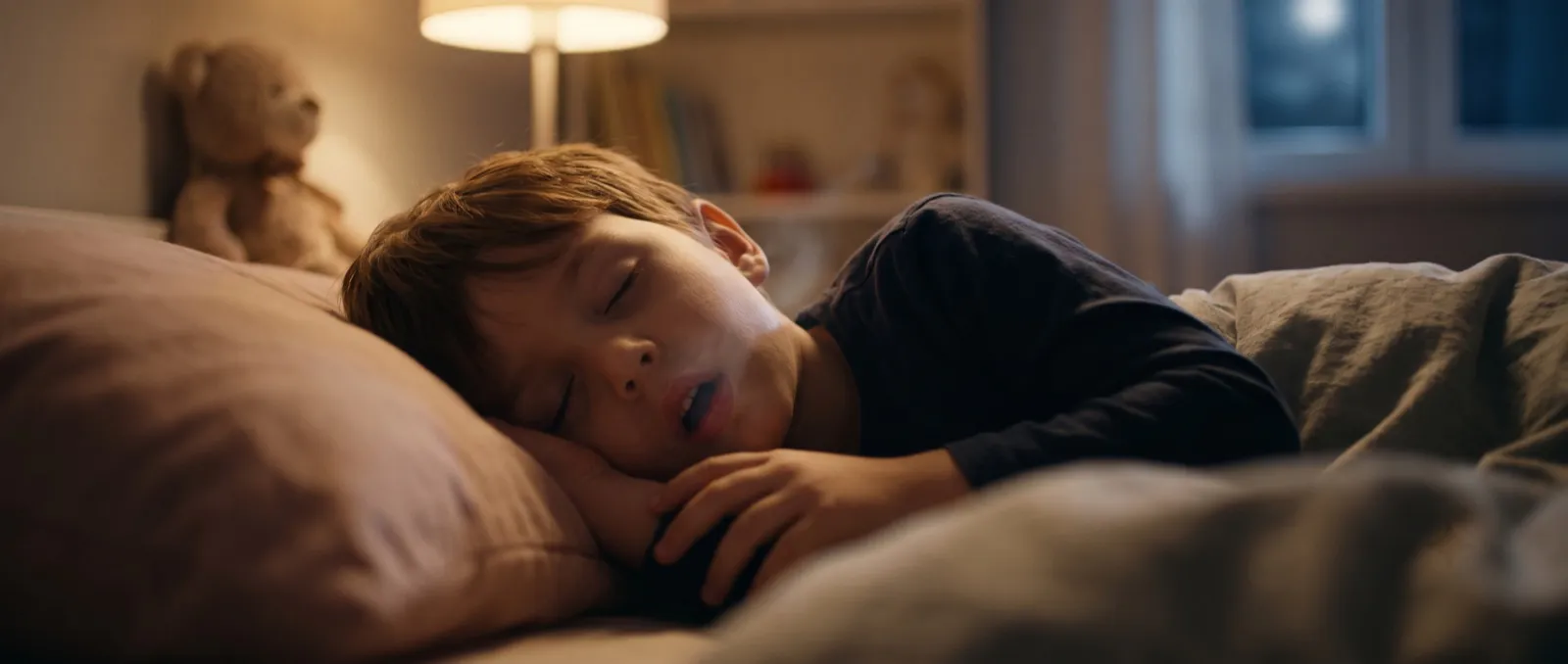
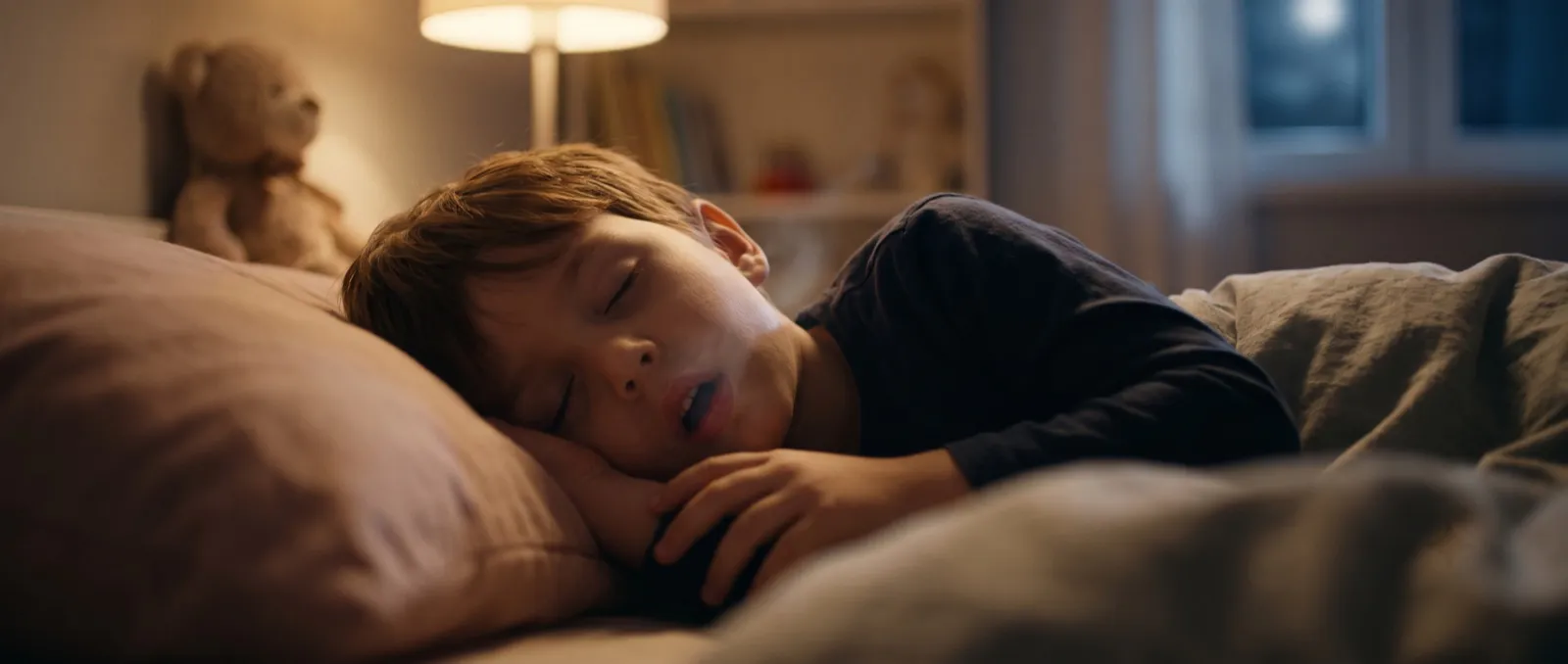
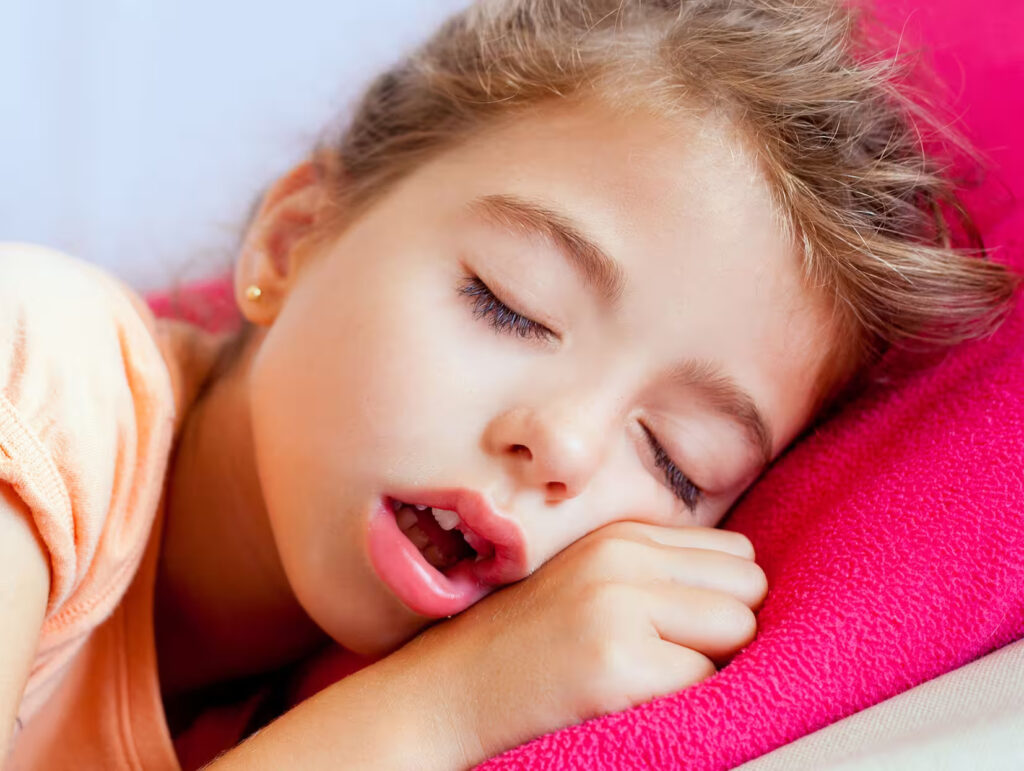
    Child sleeping with an open mouth, a possible sign of enlarged adenoids or tonsils

    What are the adenoid and the tonsils?

    The adenoid and tonsils are defense tissues made up of immune system cells. They act as a kind of “watch post” at the entrance to the airway, helping the body recognize viruses and bacteria, especially in the first years of life.

    • Tonsils (or palatine tonsils): located on the sides of the throat. They are those two little “balls” you can see when the child opens their mouth wide.
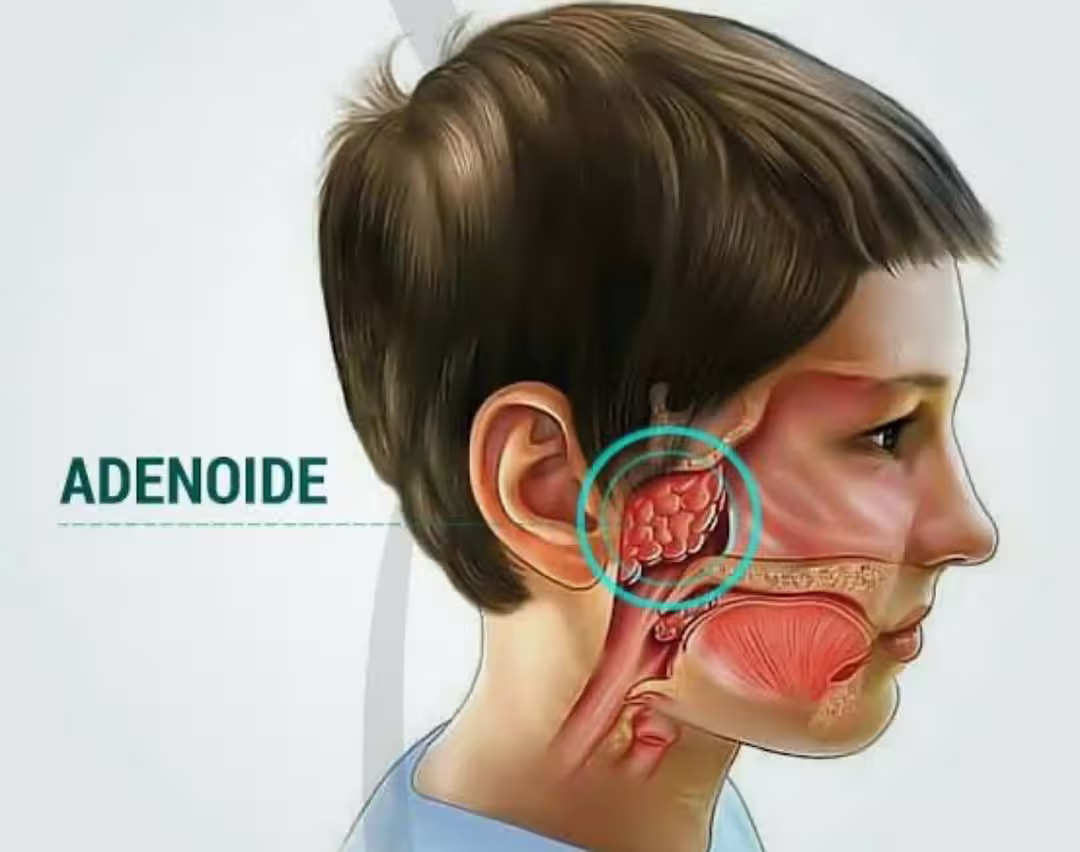
    • Adenoid (or pharyngeal tonsil): more hidden, at the back of the nose, behind the roof of the mouth. It cannot be seen with the naked eye in an ordinary appointment, which is why many parents have never seen it. It is like a third tonsil at the back of the nose.
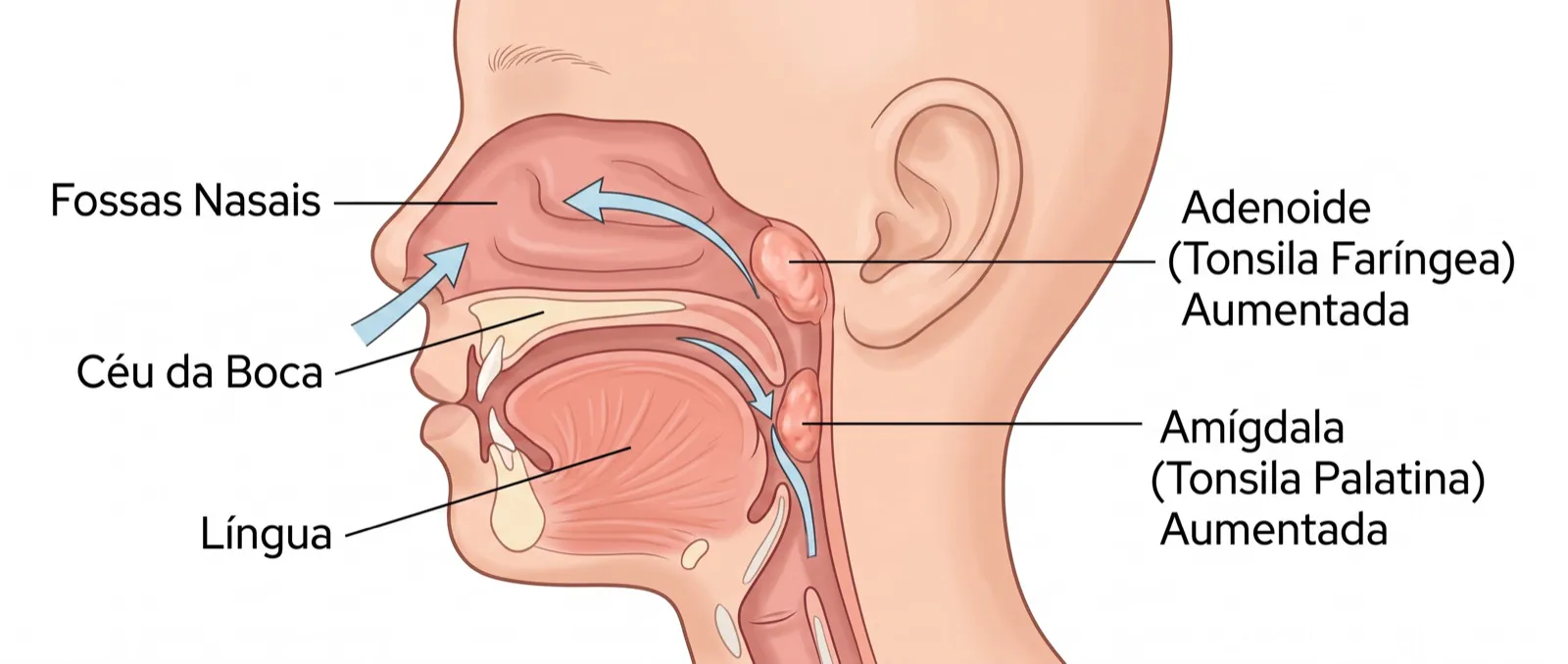
    Illustration of the location of the adenoid at the back of the nose and the tonsils in a child’s throat

    Although they are part of the defense system, the body has many other immune mechanisms. For this reason, when surgery is needed, removing these tissues does not leave the child “defenseless,” as is often feared.

    Why do the adenoid and tonsils enlarge?

    It is common for these tissues to grow naturally in the first years of life, precisely during the stage when the child has the most contact with viruses and bacteria (daycare, school, older siblings). This enlargement is often temporary and tends to recede as the child grows.

    The problem appears when the enlargement is great enough to interfere with breathing and sleep, or when the tonsils become infected repeatedly. Some children have an individual tendency toward larger tissues; respiratory allergies and recurrent infections can also contribute.

    It is worth separating two scenarios that parents often blur together:

    1. Enlarged size that obstructs (large adenoid and/or tonsils that make breathing and sleeping difficult).
    2. Recurrent infections (frequent tonsillitis), which is a different problem, even though it sometimes occurs in the same child.

    The criteria for considering surgery differ in each of these scenarios, as you will see below.

    Which signs in children deserve parents’ attention?

    The signs vary according to what is enlarged and by how much. We have gathered the most common ones below. Seeing one or another isolated item does not mean surgery is indicated, but the presence of several signs, in a persistent way, is a good reason to seek an evaluation.

    Signs linked to obstruction and sleep (large adenoid and tonsils)

    • Frequent snoring, several nights a week.
    • Mouth breathing, while asleep and sometimes awake; a child who sleeps with an open mouth or keeps the mouth open during the day.
    • Restless sleep, with frequent position changes, awakenings, and the feeling that the child “doesn’t rest.”
    • Pauses in breathing during sleep, sometimes followed by a gasp or choking sound (the sign that worries parents most, and rightly so).
    • A nasal-sounding voice (as if always “stuffed up”) and difficulty breathing through the nose.
    • Daytime sleepiness or irritability, difficulty concentrating, and an impact on school performance.
    • Bedwetting that persists or returns, which in some children is related to the sleep disorder.
    • In more prolonged cases, changes in growth or in the shape of the face and dental arch, linked to continuous mouth breathing, along with dental or bite changes.

    Together, these signs may point to what we call sleep-disordered breathing, which ranges from simple snoring to obstructive sleep apnea (OSA) in children, when there are pauses and a drop in sleep quality and oxygenation. This is a topic that deserves attention because sleep is essential to a child’s development. (You can read more about this in our article on sleep apnea in children.)

    Parents at an appointment with an otolaryngologist to evaluate a child’s adenoid and tonsils

    Signs linked to recurrent infections (tonsils)

    • Recurrent tonsillitis: frequent episodes of sore throat with fever, exudate (white spots) on the tonsils, and swollen glands in the neck.
    • Recurrent school absences and repeated use of antibiotics over the course of the year.

    If the main complaint is repeated sore throats, it is worth understanding the situation better on our page about tonsillitis and sore throat.

    Signs linked to the ear

    • Recurrent ear infections (otitis media) or fluid behind the eardrum, which may be related to an enlarged adenoid.
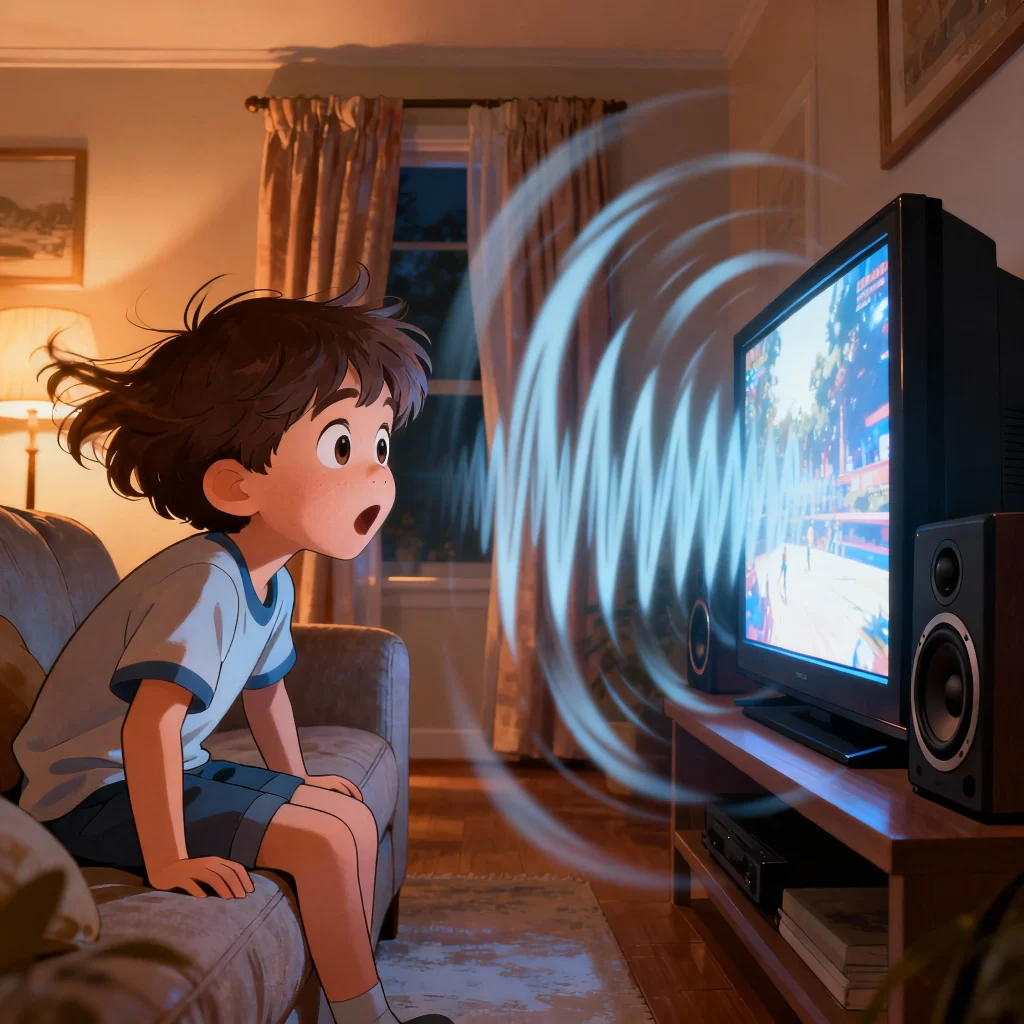
    • A sense of muffled hearing or asking to turn up the TV volume, which, in children, sometimes goes unnoticed.

    When is it a matter of simply monitoring, and when is investigation needed?

    Not every instance of snoring, and not every large tonsil, means surgery. In many cases, the most sensible approach is to monitor, because these tissues may recede as the child grows.

    In general, it usually makes sense to observe and reassess when:

    • snoring is occasional, linked to colds or allergy flare-ups, and improves outside those periods;
    • there are no pauses in breathing or signs of poor-quality sleep;
    • throat infections are infrequent;
    • the child grows, sleeps, and functions well day to day.

    On the other hand, it is usually worth investigating with an otolaryngologist when there is:

    • frequent snoring accompanied by mouth breathing and restless sleep;
    • reports of pauses in breathing during sleep;
    • an impact on behavior, attention, or school performance;
    • repeated throat infections over the course of the year;
    • recurrent ear infections or suspected hearing loss.

    The decision between monitoring and operating is individual and takes into account the intensity of the symptoms, the child’s age, the impact on their life, and the physical examination, not just the size of the tissues in isolation.

    How does the otolaryngologist evaluate the child?

    The evaluation begins with a detailed conversation (clinical history) and the physical examination. Often, this combination already guides the approach well. Depending on the case, the physician may turn to:

    • Examination of the throat and nose, to estimate the size of the tonsils and assess breathing.
    • Flexible nasolaryngoscopy (an examination with a thin, flexible camera) or, in some cases, a lateral neck radiograph, to assess the adenoid, which is normally not visible to the naked eye. The choice of examination depends on the child’s age and cooperation.
    • Polysomnography (sleep study): this is the reference test to confirm and measure the severity of OSA. According to the guidelines, it is usually indicated when there is doubt about the real need to operate, or in children with conditions that increase risk (for example, very young age, obesity, Down syndrome, or craniofacial or neuromuscular abnormalities). Not every child needs this test before surgery.
    • Hearing assessment, when ear infections or hearing loss are suspected.

    The goal of this stage is to understand the overall picture, not just “how big it is”, so that the indication, if any, is genuinely well-founded.

    When is surgery usually indicated in children?

    The most common surgery in this context is adenotonsillectomy (removal of the adenoid and tonsils). In some cases, only the adenoid is removed (adenoidectomy) or only the tonsils (tonsillectomy), depending on the evaluation.

    Recognized medical guidelines (such as those of the American Academy of Otolaryngology – AAO-HNS) organize the indications around two main reasons. It is worth stressing that these criteria guide the consultation, but the surgical indication is always an individual decision, made case by case between the family and the physician, not an automatic recommendation for every child with enlarged adenoids or tonsils.

    1. Airway obstruction and sleep apnea

    When enlargement of the adenoid and/or tonsils causes OSA or sleep-disordered breathing with an impact on the child, surgery is considered the first-line treatment, according to the leading guidelines. In these cases, improving sleep and breathing is usually the main goal.

    2. Recurrent throat infections

    For recurrent tonsillitis, the guidelines adopt quite objective criteria (known as the Paradise criteria) to help with the decision. In general, surgery tends to be considered when the number of well-documented sore-throat episodes is:

    • 7 or more episodes in 1 year; or
    • 5 or more episodes per year over the last 2 years; or
    • 3 or more episodes per year over the last 3 years.

    For this purpose, each episode must have been a sore-throat episode accompanied by at least one of the following findings: fever above 38.3 °C, swollen glands in the neck (tender lymph nodes), exudate on the tonsils, or a positive test for streptococcus bacteria (group A Streptococcus).

    Below these numbers, the guidelines recommend watching and waiting rather than operating, since in these cases surgery may not bring as much benefit. This is not a rigid, automatic rule: particular situations (such as severe tonsillitis, recurrent abscesses, or other factors) can change the assessment, always on an individual basis.

    In short: the number of episodes is not everything, but it is an important starting point. That is why it is worth noting down the dates and symptoms of your child’s tonsillitis over time; this history is a great help to the physician in deciding.

    What is recovery from surgery usually like?

    Adenotonsillectomy is usually a short procedure, generally with discharge on the same day or after a night of observation, depending on the child’s age, the case, and the team’s assessment.

    General points that are usually part of the postoperative period (always according to the physician’s individual guidance):

    • Sore throat in the first few days, which is expected and managed with medication.
    • A preferably cold, soft, and light diet at first, gradually returning to normal.
    • Relative rest and a temporary break from school and more intense physical activities for a few days.
    • Attention to warning signs indicated by the team, such as bleeding, a situation in which medical care should be sought.

    Today there is the option of using certain technologies that improve the quality and safety of the postoperative period, such as radiofrequency. To learn more about this advance in surgery, visit my page on tonsillectomy with coblation.

    Like any surgery, adenotonsillectomy has benefits and also risks, which must be explained and weighed case by case. There is no procedure without risks, and the decision must always weigh what is gained against what is avoided. Follow-up after surgery is an important part of the process.

    Parents’ frequently asked questions (FAQ)

    Is it normal for a child to snore?

    Snoring now and then, during a cold, can happen. What deserves attention is frequent snoring, especially when accompanied by mouth breathing, restless sleep, or pauses in breathing. In these cases, it is worth seeking an evaluation.

    Do enlarged adenoids and tonsils always need surgery?

    No. Many cases are monitored over time, because these tissues may recede as the child grows. Surgery is considered when there is significant obstruction of sleep/breathing or recurrent infections within certain criteria.

    Does removing the adenoid and tonsils weaken a child’s immunity?

    The body’s defense system is broad and relies on several other organs and mechanisms. When surgery is well indicated, removing these tissues does not usually compromise a child’s immunity in any meaningful way.

    What is the difference between adenoidectomy, tonsillectomy, and adenotonsillectomy?

    Adenoidectomy is the removal of the adenoid only; tonsillectomy, of the tonsils only; and adenotonsillectomy, of both. What is removed depends on the evaluation of each child.

    Do snoring and mouth breathing improve after surgery?

    When the problem is caused mainly by the enlargement of these tissues, the tendency is for significant improvement in breathing and sleep. In some children, especially when there are other factors (such as obesity), follow-up and additional measures may be needed. The individual evaluation is what defines a realistic expectation.

    Is there a right age to operate?

    There is no single age. The decision considers the symptoms, the impact on the child, and the otolaryngologist’s evaluation. In very young children, additional care is usually taken during the investigation.

    Can it be treated without surgery?

    In some cases, especially milder ones or those linked to allergy, monitoring and medical treatment of the associated causes (such as rhinitis) may be enough. The approach depends on the case.

    When to seek an evaluation?

    If your child snores frequently, sleeps with an open mouth, has restless sleep, shows pauses in breathing, or has recurrent tonsillitis, it is worth talking to an otolaryngologist. A careful evaluation helps to determine, with sound judgment, whether the best path is to monitor or to operate, and to lift from parents the burden of deciding on their own.

    To better understand enlarged adenoids in childhood, you can also read our page on adenoid hypertrophy in children and, if surgery is under discussion, the page on adenotonsillectomy. There is also content dedicated to adenoid and tonsil surgery in children.

    Dr. José Eduardo Merighe Marcondes, PHYSICIAN (CRM-SP 107.711, RQE 43.840), otolaryngologist, treats children and adults in Morumbi and Itaim (São Paulo-SP) and in Alphaville (Barueri-SP), with a focus on snoring and sleep apnea, including in childhood. Book a Consultation.

    This content is informational, does not replace a medical consultation, and does not supersede the plan of care defined by your own physician.

    About the author

    Dr. José Eduardo Marcondes

    Physician, Otolaryngologist (ENT) · CRM-SP 107.711 · RQE 43.840

    Trained and completed his residency at Escola Paulista de Medicina (UNIFESP), with more than two decades of experience. Focused on the treatment of snoring and sleep apnea, nasal obstruction, chronic sinusitis, adenoids and tonsils, in adults and children. Member of ABORL-CCF and of the medical staff at Hospital Israelita Albert Einstein, Vila Nova Star and São Luiz.

    See the full background → · Book a consultation on WhatsApp

  • Hearing Loss in Children: What Parents and Families Need to Know

    Hearing Loss in Children: What Parents and Families Need to Know

    Hearing is the foundation of language, social interaction, and learning, and small changes in how a child hears can have a major impact on development. Identifying problems early, providing reassurance with reliable information, and acting promptly can reshape a child’s path in speech, school, and family life.

    Why hearing matters from the very start

    From birth, the brain learns language from the sounds in the environment and the voice of a caregiver. When hearing is not fully intact, a child may start speaking later, tire more easily in noisy settings, and rely on lip-reading to follow conversations, which can sometimes be mistaken for inattention or shyness.

    Most common causes of hearing loss in children

    Otitis media with effusion: fluid behind the eardrum that reduces the passage of sound, common in early childhood and often silent.

    – Congenital sensorineural hearing loss: it may be genetic, isolated, or part of a syndrome, and may remain stable or progress over time.

    – Infections: cytomegalovirus during pregnancy and meningitis in childhood are among the most relevant infectious causes.

    – Perinatal factors: prematurity, neonatal hospital stays, significant jaundice, and hypoxia increase risk and call for monitoring.

    – Ototoxicity and noise: some medications and prolonged use of headphones at high volume may damage the cochlea, especially in school-age children and adolescents.

    – Other conditions: earwax impaction, anatomical changes of the ear, and autoimmune diseases are also worth considering.

    Signs that deserve attention

    – In early life: little startle response to loud sounds, limited babbling, difficulty locating sounds, and a reduced response to their own name.

    – In early childhood: delayed speech, persistent sound substitutions, a need to see the speaker’s mouth, and apparent inattention.

    – At school age: keeping the television volume high, frequently asking for repetition, listening fatigue at the end of the day, and complaints of ringing in the ears (tinnitus).

    – At any age: a family history of hearing loss, recurrent ear infections, rhinitis, and chronic mouth breathing are additional warning signs.

    What to watch for day to day

    – Language milestones: the progression from babbling to syllables, words, and sentences should occur steadily, even in bilingual settings.

    – Noisy environments: disproportionate difficulty following conversations at parties, restaurants, and in the classroom may suggest mild to moderate hearing loss.

    – Airway health: rhinitis, enlarged adenoids, snoring, and frequent ear infections warrant an otolaryngology evaluation.

    – Exposures and history: headphones, neonatal hospitalization, marked jaundice, meningitis, and the use of medications with ototoxic potential indicate a need for closer follow-up.

    How the diagnosis is made

    – At the maternity ward: the newborn hearing screening with otoacoustic emissions is mandatory and can detect changes even before discharge, allowing for safe referral.

    – The ideal timeline: screening by the first month, diagnostic confirmation by the third month, and the start of intervention by the sixth month take advantage of the best window of neuroplasticity.

    – Objective and behavioral tests: otoacoustic emissions, auditory brainstem response, tympanometry, and play audiometry help define the type and degree of hearing loss accurately.

    – Investigating the cause: genetic testing when indicated, imaging studies in selected cases, and testing for cytomegalovirus in the first weeks of life in suspected situations.

    – Teamwork: integration between pediatric otolaryngology and speech-language therapy translates test results into a personalized treatment plan.

    Treatment and rehabilitation

    – Otitis media with effusion: it often improves with active observation, allergy management, and nasal hygiene; when it persists with an impact on hearing, ventilation tubes may restore conductive hearing, and adenoidectomy may be considered in specific situations. In parent-friendly language, understand why an ear tube is sometimes needed.

    – Conductive hearing loss: earwax removal, treatment of ear infections, and bone-conduction devices can offer meaningful functional gains.

    – Sensorineural hearing loss: modern hearing aids and remote-microphone systems improve speech understanding at home and at school; in profound bilateral loss, a cochlear implant, after careful evaluation, can open valuable opportunities for language.

    – Congenital cytomegalovirus: in selected scenarios, antivirals started early may reduce the progression of hearing loss, always under specialized care.

    – Speech therapy and school: family-centered therapy, auditory-verbal stimulation, and classroom adjustments help consolidate outcomes and independence.

    – Ongoing follow-up: children with risk factors or fluctuating hearing loss need periodic reassessments, device adjustments, and consistent communication strategies.

    Prevention and healthy habits

    – Keeping vaccinations up to date reduces infections associated with hearing loss.

    – Managing rhinitis and allergies lowers the number of episodes of otitis media with effusion.

    – Responsible use of headphones, regular listening breaks, and comfortable volumes help protect the cochlea; at concerts and motorsports, ear protection is recommended.

    – Environments with good acoustics at home and at school support speech understanding and learning.

    When to seek an evaluation

    Delayed speech, recurrent ear infections, difficulty in noisy environments, or a failed result at any stage of screening are reasons to consult an otolaryngologist (ENT) and a speech-language therapist. The earlier care begins, the greater the gains in language, academic performance, and social well-being.

    Excellent care in São Paulo and Alphaville

    Dr. José Eduardo Marcondes offers comprehensive, compassionate care for hearing loss in children. With more than two decades of experience and practice at leading institutions, each child receives a tailored plan, with clear communication, close follow-up, and treatment goals aligned with the family’s routine.

    Next step

    Whenever there is any concern, scheduling a specialized evaluation is the safest way to protect a child’s development. An attentive consultation, with age-appropriate tests, makes it possible to act with precision and confidence, so that the child can grow up hearing, speaking, and learning to the fullest.

    Dr. José Eduardo Marcondes, physician, otolaryngologist (ENT). CRM-SP 107.711 (Brazilian medical license) | RQE 43.840 (specialist registration). This content is informational, does not replace a medical consultation, and does not supersede the plan of care defined by your own physician.

    About the author

    Dr. José Eduardo Marcondes

    Physician, Otolaryngologist (ENT) · CRM-SP 107.711 · RQE 43.840

    Trained and completed his residency at Escola Paulista de Medicina (UNIFESP), with more than two decades of experience. Focused on the treatment of snoring and sleep apnea, nasal obstruction, chronic sinusitis, adenoids and tonsils, in adults and children. Member of ABORL-CCF and of the medical staff at Hospital Israelita Albert Einstein, Vila Nova Star and São Luiz.

    Learn about his full career → · Schedule an appointment on WhatsApp

  • Sleep Apnea in Children: What Parents Should Watch For

    Sleep Apnea in Children: What Parents Should Watch For

    How to recognize sleep apnea in children: signs parents should not ignore

    As parents, you spend hours watching your children sleep, taking in every detail of that relaxed little face and their breathing. But have you ever noticed any unusual behavior during sleep? Loud snoring, pauses in breathing, restless sleep or excessive daytime sleepiness may be signs of obstructive sleep apnea, a problem more common than many people realize and one that can seriously affect a child’s development. To put it in perspective, obstructive sleep apnea affects about 1% to 5% of children and is most common between ages 2 and 8, when the tonsils and adenoids tend to be proportionally larger.

    What is sleep apnea in children?

    Obstructive sleep apnea is a breathing disorder that occurs during sleep, characterized by brief interruptions in breathing. During these pauses, which may last a few seconds, the child essentially stops breathing because of a blockage in the upper airway. These episodes happen repeatedly throughout the night, fragmenting sleep and preventing the child from getting the restorative rest that their development requires.

    Recognizing changes in everyday behavior

    Often, the first signs of apnea appear during the day, in the child’s everyday activities. As a physician, I always ask parents to observe how their children behave at school. Children with apnea frequently have trouble concentrating in class, getting easily distracted during explanations or while doing their homework.

    Memory can also be affected. You may notice that your child forgets simple messages, has trouble remembering where they left their toys, or needs several repetitions to learn a song or a poem. Information processing tends to slow down, so the child may take longer to understand instructions or answer questions.

    Child with daytime sleepiness lying down yawning
    Child with daytime sleepiness lying down yawning

    In terms of behavior, watch for excessive irritability, especially toward the end of the day. Children who were once calm may become aggressive, have tantrums for no apparent reason, or show signs of hyperactivity. Paradoxically, unlike adults who tend to feel sleepy, many children with apnea become agitated and restless as a way of compensating for their tiredness.

    School performance is often one of the first things to catch the attention of parents and teachers. Falling grades, difficulty keeping up with the class, and problems with reading and writing can be direct consequences of fragmented sleep. Some children are even referred for an attention deficit evaluation when the real problem lies in inadequate sleep.

    How fragmented sleep harms development

    When sleep is constantly interrupted by apnea episodes, the child cannot reach the deeper stages of sleep that are essential for development. During these stages, the brain consolidates memories, processes information learned during the day and releases hormones that are fundamental for growth.

    Chronic oxygen deprivation, caused by the breathing pauses, has a direct impact on how the brain functions. Brain cells, especially in the areas responsible for attention, memory and learning, are affected by this reduced oxygen supply. Over time, and if left untreated, this may lead to lasting changes in cognitive development.

    In addition, the child’s body remains in a constant state of stress during the night, releasing hormones such as cortisol that can interfere with growth and emotional development. This is why many children with apnea show poor weight and height gain, along with mood changes.

    Signs that should get your attention

    As a physician with more than 20 years of experience, I always encourage parents to pay close attention to how their children behave both at night and during the day.

    During sleep, watch for frequent, loud snoring, which can be intense enough to wake them at night. Notice whether there are pauses in breathing followed by gasping or choking sounds. The child may sleep in unusual positions in an attempt to ease the passage of air, have extremely restless sleep with constant changes of position, and sweat excessively during the night.

    Child with sleep apnea sleeping with the mouth open
    Child with sleep apnea sleeping with the mouth open

    During the day, notice whether the child shows excessive sleepiness, constant tiredness even after a full night’s sleep, irritability, aggressiveness or hyperactivity, difficulty concentrating at school and a drop in school performance. Often, unlike adults who feel sleepy, children with apnea may become hyperactive and restless.

    Specific signs related to breathing and eating

    Mouth breathing is an important sign that should not be ignored. When the child keeps their mouth constantly open, even during the day, it may indicate chronic nasal obstruction. Persistent bad breath and dryness of the lips and around the mouth are also consequences of this oral breathing.

    At mealtimes, watch for specific behaviors that point to breathing difficulty. Children with apnea frequently eat with their mouth open, making noises while chewing. They may chew very slowly, stopping repeatedly to breathe through the mouth, or swallow large pieces of food to avoid chewing for too long.

    Some children prefer soft or liquid foods, avoiding textures that require prolonged chewing. During meals, they may seem breathless or tired, especially when eating foods that take more chewing effort. It is also common for them to complain of difficulty swallowing or a sensation of food being “stuck” in the throat.

    Also pay attention to complaints of a blocked ear, ringing in the ears or frequent ear pain. Apnea can cause Eustachian tube dysfunction, leading to recurrent ear infections and an impact on hearing.

    Why is it so important to stay alert?

    Sleep apnea is not just a matter of breathing during the night. Its consequences can be serious for a child’s development, which is why I always stress the importance of early diagnosis.

    Impact on growth and development: During deep sleep, the body releases hormones that are essential for growth. Children with apnea may show poor weight and height gain, along with changes in facial development and the dental arch.

    Cognitive and learning difficulties: Fragmented sleep and reduced oxygen levels directly affect brain development. Studies show that children with apnea have difficulties with memory, attention, concentration and information processing. School performance may suffer, with lower grades and learning difficulties.

    Behavioral and emotional changes: A lack of quality sleep can lead to significant behavioral problems. Children may show hyperactivity, aggressiveness, attention deficit, irritability and even symptoms resembling ADHD. Emotional problems such as anxiety and depression may also develop.

    Cardiovascular complications: Although less common in children, apnea may lead to pulmonary hypertension and, in severe cases, heart problems. Chronic oxygen deprivation places an added burden on the cardiovascular system.

    Important risk factors

    Some children are more prone to developing sleep apnea. Enlarged tonsils and adenoids are the most common cause in childhood. Childhood obesity also significantly increases the risk. Children with respiratory allergies, gastroesophageal reflux, craniofacial malformations or genetic syndromes also deserve special attention. When the cause is enlarged tonsils and adenoids, surgery (adenotonsillectomy) is the first-line treatment and helps most children. Even so, it is not a guaranteed cure: some children, especially those with obesity or who are older, may keep some degree of apnea after surgery. That is why re-evaluation after treatment is so important.

    The importance of early diagnosis

    It often takes a long time between the first symptoms and the correct diagnosis. During this time, the child is exposed to all the complications I mentioned. That is why I always tell parents: do not ignore the signs.

    Diagnosis involves a detailed clinical evaluation, specific questionnaires to screen for sleep disorders and, when necessary, polysomnography (sleep study), which is the gold-standard test. The earlier we identify and treat apnea, the better the outcomes for the child’s development.

    What to expect from treatment

    A large international trial (the CHAT trial, published in the New England Journal of Medicine in 2013) helped clarify what to expect from surgery in children with mild to moderate apnea. Compared with watchful waiting, adenotonsillectomy improved behavior, quality of life, symptoms, and the sleep study itself.

    How it is treated

    Treatment is individualized. In milder cases, measures such as a nasal corticosteroid spray and, in selected situations, a leukotriene antagonist (montelukast) may help, although the evidence is short-term. When the tonsils and adenoids are significantly enlarged, surgery is the first choice. If apnea persists after surgery, or when surgery is not indicated, CPAP (a device that keeps the airway open with air pressure) is a good option. And in a child with obesity, weight control is part of treatment, because obesity raises the risk that apnea persists.

    When to seek help?

    If you notice any of these signs in your children, especially frequent snoring, breathing pauses observed during sleep or significant behavioral changes, do not hesitate to seek a specialist evaluation. As I always tell parents in my office: the quality of your child’s sleep is fundamental to their future.

    Keep in mind that sleep apnea in children can be treated, and the earlier the intervention, the better the outcomes for the child’s physical, cognitive and emotional development. Schedule an appointment through our WhatsApp so that, together, we can find the best way to ensure peaceful nights and healthy development for your little one.

    Frequently asked questions

    Is every snore a sign of apnea?

    No. Occasional snoring is common. The warning sign is frequent, loud snoring together with pauses in breathing, gasping, or very restless sleep. It is that combination that warrants evaluation.

    Does my child really need a sleep study (polysomnography)?

    Polysomnography is the standard test to confirm apnea and measure its severity. Not every child needs it right away: the assessment starts with the clinical history and an exam of the nose and throat, and the specialist orders it when the result will change management.

    Does tonsil and adenoid surgery cure apnea?

    In most children with enlarged tonsils and adenoids, surgery greatly improves or resolves the problem. But it is not a guarantee: children with obesity or who are older may keep some degree of apnea, so re-evaluation after surgery is important.

    My child is obese. Does that change anything?

    Yes. Obesity increases the risk of apnea and the chance it persists even after surgery. In these cases, weight management is part of treatment and CPAP is sometimes needed as well.

    Can apnea be mistaken for ADHD?

    It can. Apnea causes inattention, restlessness, and hyperactivity that resemble ADHD, and children are sometimes referred as if they had the disorder. Treating the apnea often improves these symptoms, but the two conditions can also coexist. That is why it is worth investigating sleep before making the diagnosis.

    References

    1. Marcus CL, et al.; CHAT. A randomized trial of adenotonsillectomy for childhood sleep apnea. N Engl J Med. 2013;368(25):2366-2376.
    2. Marcus CL, et al.; AAP. Diagnosis and Management of Childhood Obstructive Sleep Apnea Syndrome. Pediatrics. 2012;130(3):576-584.
    3. Lumeng JC, Chervin RD. Epidemiology of pediatric obstructive sleep apnea. Proc Am Thorac Soc. 2008;5(2):242-252.
    4. Bhattacharjee R, et al. Adenotonsillectomy outcomes in treatment of obstructive sleep apnea in children: a multicenter retrospective study. Am J Respir Crit Care Med. 2010;182(5):676-683.
    5. Kheirandish-Gozal L, Gozal D. Intranasal budesonide treatment for children with mild obstructive sleep apnea syndrome. Pediatrics. 2008;122(1):e149-e155.
    6. Goldbart AD, Greenberg-Dotan S, Tal A. Montelukast for children with obstructive sleep apnea. Pediatrics. 2012;130(3):e575-e580.

    Dr. José Eduardo Marcondes, physician, otolaryngologist (ENT). CRM-SP 107.711 (Brazilian medical license) | RQE 43.840 (specialist registration). This content is informational, does not replace a medical consultation, and does not supersede the plan of care defined by your own physician.

    About the author

    Dr. José Eduardo Marcondes

    Physician, Otolaryngologist (ENT) · CRM-SP 107.711 · RQE 43.840

    Trained and completed his residency at Escola Paulista de Medicina (UNIFESP), with more than two decades of experience. Focused on the treatment of snoring and sleep apnea, nasal obstruction, chronic sinusitis, adenoids and tonsils, in adults and children. Member of ABORL-CCF and of the medical staff at Hospital Israelita Albert Einstein, Vila Nova Star and São Luiz.

    Learn about his full career → · Schedule an appointment on WhatsApp

  • Adenoid and Tonsil Surgery in Children

    Adenoid and Tonsil Surgery in Children

    What should parents watch for? When is surgery needed?

    I want to talk to parents about adenotonsillectomy in children. I know this topic can raise many questions, so I will explain in a simple and clear way everything that is important for you to understand what is happening with your child, what to watch for, when it may be time to consider surgery, and how it is performed.

    First of all: what are the adenoids?

    This is one of the most common questions parents ask. What are the adenoids, sometimes called “spongy tissue”? The adenoids are a type of tonsil located at the back of the nose. Every child has this structure, but it can cause significant problems when it becomes too large.

    What aspects should you pay attention to?

    One of the most important things to notice is whether your child frequently breathes through the mouth, even when not having a cold. Blocked nasal breathing causes the child to sleep with the mouth open and often to snore.

    Also keep an eye on your child’s mood: excessive tiredness, irritability with no apparent cause, and lack of energy may be linked to poor oxygenation during sleep.

    If you notice a more “muffled,” nasal-sounding voice, this may be a sign of nasal obstruction. It is also worth noting any reports of pauses in breathing while the child sleeps.

    Another sign is children who eat very quickly or take a long time to swallow their food.

    Symptoms and signs that may indicate enlarged adenoids

    When the adenoids grow too much, certain signs tend to appear that do not go unnoticed.

    The child complains of a stuffy nose without having a cold, has persistent bad breath, and dryness around the mouth.

    Children often complain of a “blocked ear” or ringing, because enlarged adenoids may impair proper drainage of the middle ear, which can favor infections. Recurrent ear infections are common and may affect hearing.

    During sleep, in addition to snoring, restless sleep is frequent, with the child waking several times, which can lead to drowsiness or difficulty concentrating at school.

    When is surgery indicated?

    I usually recommend adenotonsillectomy when treatment with nasal sprays, antibiotics, or clinical follow-up does not resolve the obstruction and infections keep recurring.

    If your child snores a lot, has obstructive sleep apnea at night, or has had three or more ear infections within a few months, surgery may be the solution in selected cases.

    In addition, prolonged mouth breathing may affect facial and dental development, which is why timely intervention can help prevent changes in the dental arch and tooth alignment.

    Traditional surgical techniques for adenoids and tonsils in children

    The classic method of removing the adenoids and tonsils in children uses instruments to cut and curette the tissue. It is a safe procedure, but it may cause somewhat more discomfort and bleeding.

    Electrocautery, which uses heat to remove the tissue and control bleeding, has become popular because it reduces intraoperative bleeding. However, it can still cause moderate pain in the first few days after surgery.

    Advanced technologies: microdebrider and radiofrequency

    To offer children greater comfort and safety, I use two state-of-the-art technologies.

    The microdebrider for adenoidectomy is used to perform the surgery with video guidance, allowing only the excess tissue to be removed, healthy structures to be preserved, and bleeding to be reduced.

    In tonsillectomy, radiofrequency removes the tissue with controlled heat, which tends to result in less postoperative pain and faster recovery. Recovery is generally far more comfortable with this technology.

    These technologies may allow earlier discharge, a quicker return to school activities, and much greater peace of mind for the whole family.

    If your child shows these characteristics, schedule a consultation through our WhatsApp to better understand the best options to improve your little one’s quality of life.

    Dr. José Eduardo Marcondes, physician, otolaryngologist (ENT). CRM-SP 107.711 (Brazilian medical license) | RQE 43.840 (specialist registration). This content is informational, does not replace a medical consultation, and does not supersede the plan of care defined by your own physician.

    About the author

    Dr. José Eduardo Marcondes

    Physician, Otolaryngologist (ENT) · CRM-SP 107.711 · RQE 43.840

    Trained and completed his residency at Escola Paulista de Medicina (UNIFESP), with more than two decades of experience. Focused on the treatment of snoring and sleep apnea, nasal obstruction, chronic sinusitis, adenoids and tonsils, in adults and children. Member of ABORL-CCF and of the medical staff at Hospital Israelita Albert Einstein, Vila Nova Star and São Luiz.
    Learn about his full career → · Schedule a consultation on WhatsApp

  • Doctor, does my child really need that little ear tube?

    Doctor, does my child really need that little ear tube?

    If you have spent sleepless nights holding your child as they cried from an earache, and later noticed that, even without pain, they did not seem to hear well, turned the television up louder, or seemed distracted at school, you know the worry that brings you to this question. When ear infections keep coming back, or when fluid stays trapped behind the eardrum for a long time, the otolaryngologist (ENT) may suggest placing a ventilation tube, also called a tympanostomy tube. Here I have gathered the questions I hear most in the office, along with what the science shows today, so you can understand why, when, and whether this “little tube” makes sense for your child. Let me say something reassuring up front: in most cases the treatment is medical or watchful waiting, and not every child who gets ear infections will need the tube. That feeling of a blocked ear also shows up, briefly, when flying.

    First, understand what the tube solves (and what it does not)

    The target of treatment is the fluid trapped in the middle ear, the space behind the eardrum. It can build up after an infection (called otitis media with effusion, or OME, when there is fluid without active infection) or come along with repeated infections. While this fluid is there, the eardrum vibrates poorly and sound arrives muffled, as if the child had a blocked ear. Hence the hearing loss, ringing in the ears (tinnitus), and sometimes trouble with balance. Recurrent ear infections are a common cause of hearing loss in children.

    It helps to put this in perspective, because it is less frightening once you know the whole picture. Fluid in the ear is common and, most of the time, clears on its own: about 9 in 10 children have at least one episode before age 5, half resolve within 3 months, and about 95% within a year (AAO-HNS, 2016). That is why the tube is not for every bit of fluid that appears. It comes into play when the fluid insists on staying and starts to affect hearing, or when ear infections are too frequent. What the tube does is drain that fluid and ventilate the ear, equalizing pressure. What it does not do is cure the allergy, the enlarged adenoid, or the cold behind the problem; for the cause, the treatment is different.

    So, when is the tube really indicated?

    Two situations concentrate the indication, and in both the ear exam matters more than the infection count alone:

    • Persistent fluid. Otitis media with effusion in both ears for three months or more, with documented hearing difficulty, is the best-established indication (AAO-HNS, 2022). When there are signs of impact on speech, learning, or behavior, the indication is stronger.
    • Recurrent ear infections, with an important caveat. Recurrent otitis media means three or more episodes in six months, or four in a year. The tube is indicated mainly when there is still fluid in the ear at an exam done between episodes; if the ear is completely dry in that period, current guidelines do not recommend the tube based on the infection count alone (AAO-HNS, 2022).

    Why the caution? Because a randomized trial published in 2021 compared placing the tube with continuing medical treatment in children with recurrent ear infections and found no difference in the number of new infections over two years (1.48 vs. 1.56 episodes per child-year). The tube did have one gain: it lengthened the time until the next infection (about 4.3 vs. 2.3 months) (Hoberman, 2021). In other words, the decision is not automatic. It weighs the whole picture: hearing, the presence of fluid, the frequency of episodes, and how much all of this affects your child’s sleep, speech, and school.

    Outside these situations, when the fluid is recent (less than three months) and hearing is preserved, the usual approach is to observe, because the chance of resolving on its own is high.

    What is the surgery like, and is the anesthesia safe?

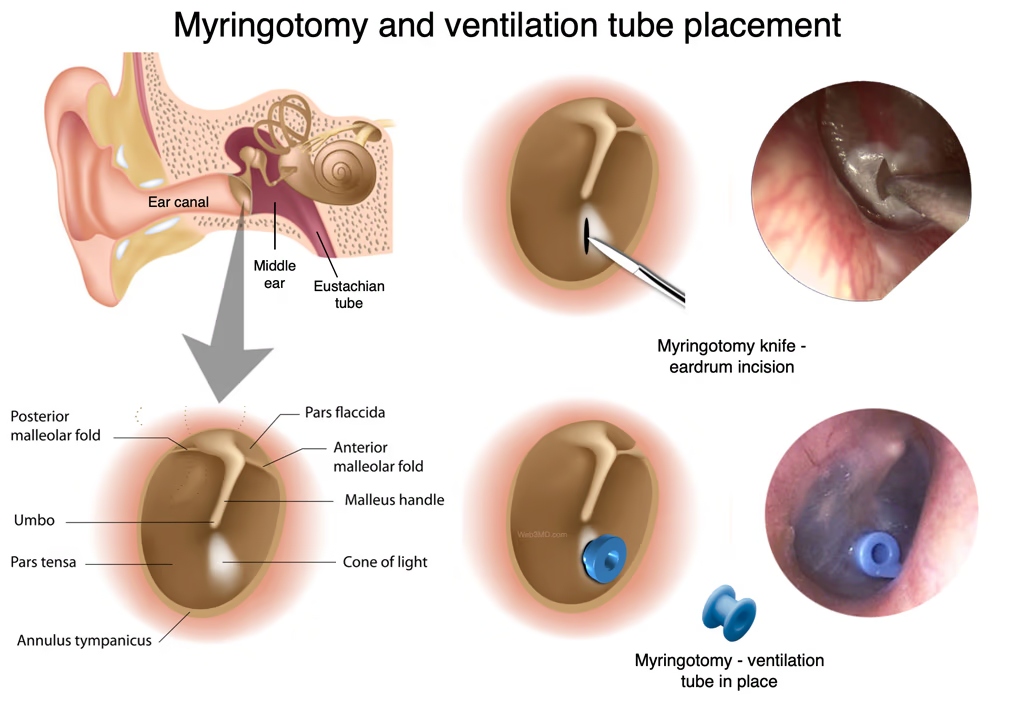
    With the help of an endoscope, the doctor makes a small opening in the eardrum, suctions the fluid, and inserts the little tube, which works like a valve, letting air in and fluid out. It usually takes 10 to 15 minutes per ear, and in most cases the child goes home the same day.

    The question that worries parents most is almost never about the tube, but about the anesthesia. In children we use general anesthesia, and the concern is natural. It is worth knowing that a large international randomized study followed children who received less than one hour of general anesthesia as infants and found no difference in neurological development at age 5 compared with those who did not (GAS, McCann, 2019). It is a short surgery, performed by a team used to operating on children, and this finding usually brings families peace of mind.

    Will it hurt? What is recovery like?

    During the surgery, thanks to the anesthesia, there is no pain. Afterward, mild discomfort or a thin discharge from the ear is common in the first few days, but nothing that usually disturbs sleep or stops play. For comfort, we recommend a simple pain reliever. If discharge appears, treatment is local, with ear drops; in most cases oral antibiotics are not needed (AAO-HNS, 2022). Within a few days the strange sensation fades, and many families notice right away that the child responds again when called. When the fluid drains, hearing improves.

    Water in the ear: what has really changed

    This is the point that raises the most questions, because the guidance changed. For many years, strict water protection was advised, with cotton, plugs, and caps for every bath and every pool. The most recent guidelines revised this: for most children with a tube, routine protection is not needed for ordinary bathing or for swimming in clean, treated water (AAO-HNS, 2022). Studies showed that systematic protection did not meaningfully reduce the chance of discharge.

    Protection is now reserved for specific situations, such as diving deep, swimming in lake or poorly treated water, dunking the head in a soapy bath, or when the child feels discomfort from water getting in. Since every case has its particulars, your ENT will advise what applies to your child. The practical good news is that, most of the time, the bath and pool routine stays almost normal.

    How long the tube stays and what to expect from the results

    The tube usually stays in place for about 12 months on average, until the membrane heals around it. When the time comes, the body expels it naturally, without another surgery, and the tiny hole closes on its own in the great majority of cases. That is why follow-up visits matter: they confirm that it came out properly and that the eardrum is healthy.

    As for the results, hearing usually improves quickly, and reviews of the evidence show a clear gain in the short and medium term (MacKeith, 2023).

    In some cases, when improvement is incomplete, a new tube placement is needed. The main risk factors for this are early tube extrusion, craniofacial changes, younger age, and some clinical conditions such as recurrent acute otitis media (Goel, 2021). One factor that reduces the chance of another surgery is adenoidectomy performed together with tube placement, especially in children aged 4 and older (Qian, 2025); in a meta-analysis, concurrent adenoidectomy roughly halved the chance of needing new tubes (Goel, 2021).

    Risks and sequelae, with numbers

    This is a low-risk procedure, but, like any surgery, it has possible complications. The numbers help put them in scale (Kay, Nelson, and Rosenfeld, 2001):

    • Ear discharge (otorrhea): the most common, around 16% in the immediate postoperative period, almost always resolved with ear drops.
    • Eardrum scarring (tympanosclerosis): appears in about a third of cases after the tube comes out, but is usually just a mark, with no noticeable effect on hearing.
    • Perforation that does not close on its own: uncommon with short-term tubes (about 2%) and more frequent with long-term tubes; when it occurs, it can be corrected with a small repair.
    • Cholesteatoma: very rare (below 1%).

    The tube can also become blocked or come out early, situations that are monitored in the office, where the doctor decides whether it needs to be replaced.

    Are there alternatives to the tube?

    Yes, and they are part of the conversation. When the fluid is recent and hearing is good, the best approach is usually to wait and reassess, because the chance of spontaneous resolution is high. Treating what lies behind the problem helps: controlling allergic rhinitis, managing repeated colds, and assessing the adenoid. In some children, especially from age 4 or when there are adenoid symptoms, removing the adenoid together with tube placement reduces the chance of new episodes (AAO-HNS, 2022). Antibiotics have a role in treating acute episodes but are not recommended as ongoing prevention. Which path makes sense depends on the exam, the hearing, and your child’s history.

    In the end, the decision about the tube is shared between you and the doctor, looking at hearing, the frequency of episodes, and the impact on the child’s daily life. When well indicated, it restores good hearing, improves sleep and energy, and breaks a cycle of infections that interferes precisely with the stage of learning to speak and socialize. If any doubt remains, schedule a conversation so we can assess the case calmly. At the office of Dr. José Eduardo Marcondes, an otolaryngologist (ENT physician, CRM-SP 107.711 | RQE 43.840), guidance is always individualized, so you can decide with confidence and information.

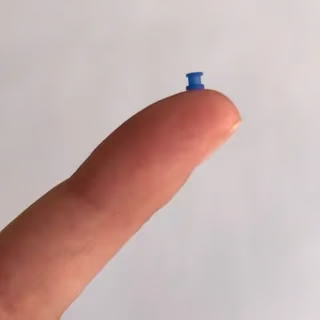
    Illustration of a ventilation tube (tympanostomy) placed in a child's eardrum

    Frequently asked questions

    Can my child swim and bathe with the tube?

    In most cases, yes, with no routine protection for ordinary bathing or for swimming in clean, treated water. Current guidelines no longer recommend plugs and caps for all children (AAO-HNS, 2022). Protection is reserved for specific situations, such as deep diving or poorly treated water, and your ENT advises what applies to your case.

    Does the surgery hurt? And is general anesthesia safe?

    There is no pain during the procedure, thanks to the anesthesia. It is a short surgery, a few minutes per ear. As for general anesthesia, a large randomized study showed that less than one hour of anesthesia early in life did not change children’s neurological development at age 5 (GAS, McCann, 2019).

    Does the tube fall out on its own? Is another surgery needed to remove it?

    In general the tube stays about 12 months and the body expels it naturally, without a new surgery. What matters is keeping the follow-up visits to confirm it came out and to check the eardrum.

    Once placed, does it solve the problem for good?

    It usually resolves the infections and hearing loss of that period. But some cases need a second tube later on, especially when the tube comes out early, in a younger child, or when there are craniofacial changes. This is expected and does not mean something went wrong.

    Does every ear infection need a tube?

    No. Most episodes of ear fluid resolve on their own within weeks to months. The tube is considered when the fluid persists and affects hearing, or when infections recur with fluid present at the exam.

    Is there an alternative before operating?

    Yes: observe and reassess when the situation is recent, treat allergic rhinitis, and assess the adenoid. In selected cases, removing the adenoid together with the tube helps reduce recurrences. The choice depends on individual assessment.

    References

    1. American Academy of Otolaryngology–Head and Neck Surgery Foundation. Clinical Practice Guideline: Tympanostomy Tubes in Children (Update). Otolaryngology–Head and Neck Surgery. 2022;166(1_suppl):S1-S55.
    2. Rosenfeld RM, et al. Clinical Practice Guideline: Otitis Media with Effusion (Update). Otolaryngology–Head and Neck Surgery. 2016;154(1_suppl):S1-S41.
    3. Hoberman A, et al. Tympanostomy Tubes or Medical Management for Recurrent Acute Otitis Media. New England Journal of Medicine. 2021;384(19):1789-1799.
    4. MacKeith S, et al. Ventilation tubes (grommets) for otitis media with effusion (OME) in children. Cochrane Database of Systematic Reviews. 2023;(11):CD015215.
    5. Kay DJ, Nelson M, Rosenfeld RM. Meta-analysis of tympanostomy tube sequelae. Otolaryngology–Head and Neck Surgery. 2001;124(4):374-380.
    6. Goel AN, Omorogbe A, Hackett A, Rothschild MA, Londino AV 3rd. Risk Factors for Multiple Tympanostomy Tube Placements in Children: Systematic Review and Meta-Analysis. The Laryngoscope. 2021;131(7):E2363-E2370.
    7. Qian ZJ, Truong MT, Alyono JC, Valdez T, Chang K. Tympanostomy Tube Insertion With and Without Adenoidectomy. JAMA Otolaryngology–Head & Neck Surgery. 2025;151(1):40-46.
    8. McCann ME, et al. Neurodevelopmental outcome at 5 years of age after general anaesthesia or awake-regional anaesthesia in infancy (GAS). The Lancet. 2019;393(10172):664-677.

    This content is informational, does not replace a medical consultation, and does not supersede the plan of care defined by your own physician.

    About the author

    Dr. José Eduardo Marcondes

    Physician, Otolaryngologist (ENT) · CRM-SP 107.711 · RQE 43.840

    Trained and completed his residency at Escola Paulista de Medicina (UNIFESP), with more than two decades of experience. Focused on the treatment of snoring and sleep apnea, nasal obstruction, chronic sinusitis, adenoids and tonsils, in adults and children. Member of ABORL-CCF and of the medical staff at Hospital Israelita Albert Einstein, Vila Nova Star and São Luiz.
    Learn about his full career → · Schedule an appointment on WhatsApp

Agende