Surgical procedure
TORS – Robotic Surgery
TORS robotic surgery sleep apnea: Dr. José Eduardo Marcondes performs this minimally invasive transoral technique for obstructive sleep apnea in São Paulo.
What is TORS and how can Robotic Surgery help treat sleep apnea?
What is Robotic Surgery for Sleep Apnea?
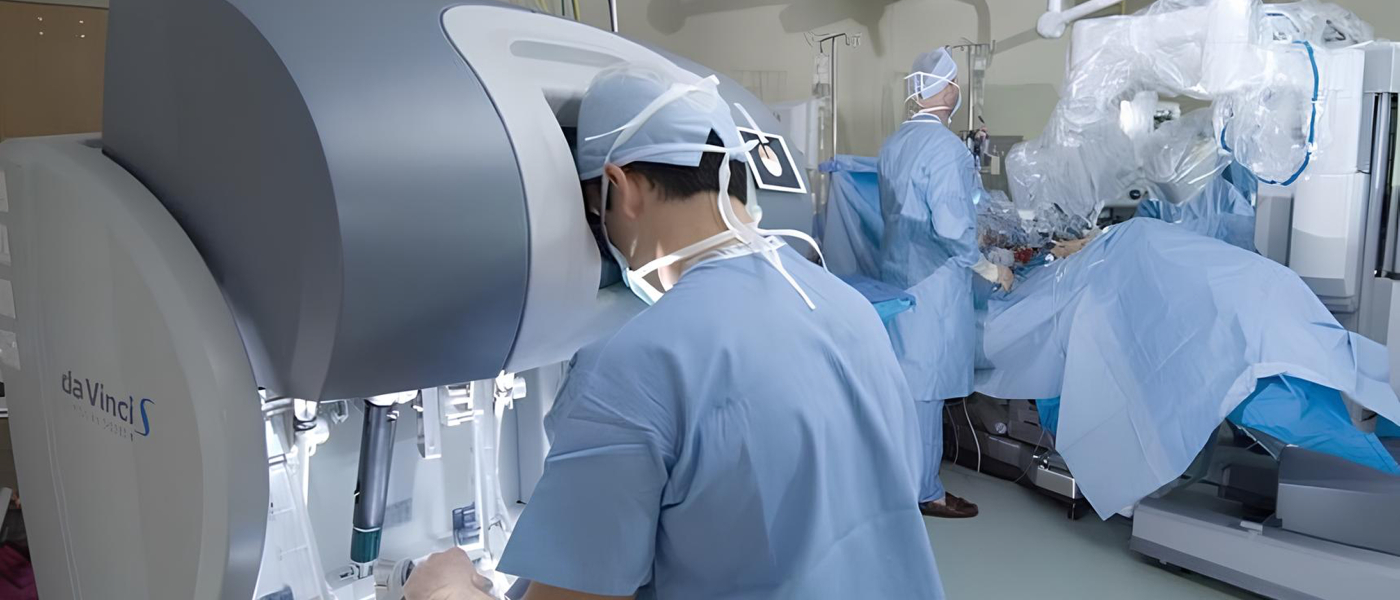
Robotic Surgery for Sleep Apnea (TORS – Transoral Robotic Surgery) is a state-of-the-art procedure that uses the Da Vinci surgical platform to treat obstructive sleep apnea syndrome. This revolutionary system allows the surgeon to perform precise interventions through the oral cavity, with no external incisions, delivering superior outcomes and a lower risk of complications for patients.
Obstructive sleep apnea is characterized by repeated interruptions of breathing during sleep, caused by closure or narrowing of the upper airway. The condition affects millions of people and, if left untreated, can lead to serious complications such as high blood pressure, cardiac arrhythmias, heart attacks, and strokes.
Da Vinci Technology: Precision and Safety.
The Da Vinci robotic platform represents the most advanced technology available for sleep apnea surgery. The system features articulated robotic arms with up to 270 degrees of motion, fully controlled by the surgeon through a computerized console. High-definition three-dimensional visualization with up to 12x magnification provides unmatched surgical precision, especially in hard-to-reach areas such as the base of tongue and the hypopharynx.
The technology eliminates the natural tremor of the human hand and delivers extremely delicate, precise motion. The articulated instruments exceed the mobility of the human hand, allowing the surgeon to operate within the confined spaces of the oral cavity with maximum safety and control.
Indications for Robotic Surgery.
Robotic surgery is particularly indicated for sleep apnea patients who have not achieved success with conservative treatments. The main indications include:
Patients with difficulty adapting to CPAP or oral appliances;
Cases of significant base-of-tongue obstruction identified by flexible nasolaryngoscopy or CT scan;
Patients with lingual tonsil hypertrophy; and
Patients with good muscle tone but specific mechanical obstructions in the hypopharynx.
Pre-operative Assessment.
The success of robotic surgery depends fundamentally on accurate diagnostic assessment, including physical examination, review of the polysomnography (sleep study), and anatomical evaluation with CT scan and/or flexible nasolaryngoscopy.
This thorough assessment makes it possible to identify which structures are causing the obstruction and to determine the most appropriate surgical technique for each specific case.
Benefits of Robotic Surgery.
Greater surgical precision with a lower risk of injury to critical structures is the main advantage of the robotic technique. The procedure results in less bleeding both during and after surgery, with more predictable outcomes – particularly in base-of-tongue reductions.
Surgical Technique.
The procedure is performed under general anesthesia and lasts approximately 2 hours, depending on the complexity of the case. The surgeon operates through the oral cavity using the robotic arms to remove obstructive tissue, particularly in the lateral pharyngeal wall, base of tongue, and lingual tonsils.
High-definition three-dimensional visualization makes it possible to identify and preserve important anatomical structures such as nerves and blood vessels. The precision of the robotic motion enables tissue resection with less collateral injury, reducing the rate of complications and increasing the effectiveness of surgery.
Outcomes and Effectiveness.
Robotic surgery for sleep apnea achieves higher success rates than traditional uvulopalatopharyngoplasty (UPPP). In addition to greater precision and the ability to reach hard-to-access regions such as the base of tongue, it can be combined with other procedures such as lateral wall surgery (e.g., expansion pharyngoplasty) and palatal procedures (e.g., barbed reposition pharyngoplasty). Learn more about how snoring and sleep apnea surgery works.
Frequently asked questions about TORS
What is TORS robotic surgery for sleep apnea?
TORS – Transoral Robotic Surgery – is a surgical technique performed through the mouth, without external incisions, used to treat selected cases of obstructive sleep apnea. It allows precise treatment of hard-to-reach areas of the upper airway, especially the base of tongue and other retrolingual regions, within an individualized surgical plan.
Who is a candidate for TORS robotic surgery?
TORS may be indicated for patients with confirmed obstructive sleep apnea, especially when there is significant obstruction at the base of tongue or other segments of the hypopharynx. In general, it is considered when there is intolerance, poor adaptation, or insufficient response to CPAP or oral appliances, always after a detailed anatomical evaluation of the airway.
How long does robotic surgery for sleep apnea take?
The procedure is performed under general anesthesia and, on average, takes around 2 hours. Duration may vary depending on the patient’s anatomy and whether other techniques are combined in the same operation. When needed, surgery can be combined with other apnea treatments, based on the pattern of obstruction identified during the pre-operative assessment.
What tests are required before TORS surgery?
The pre-operative assessment usually includes a specialized clinical examination, review of the polysomnography (sleep study), and anatomical evaluation of the upper airway. Flexible nasolaryngoscopy is useful in the initial assessment and, in selected cases, drug-induced sleep endoscopy (DISE) can help identify the levels of collapse more precisely and define the best surgical strategy.
Does TORS have a higher success rate than other apnea surgeries?
TORS shows higher success rates than traditional uvulopalatopharyngoplasty (UPPP), mainly because it provides access to the base of tongue. The precision of the robotic arms (with 3D visualization and up to 12x magnification) also results in less bleeding and less injury to structures such as nerves and blood vessels.
Dr. José Eduardo Marcondes, physician, otolaryngologist (ENT), CRM-SP 107.711, RQE 43.840. This content is informational, does not replace a medical consultation, and does not supersede the plan of care defined by your own physician.
Sleep well again.
The diagnosis is individual. Book a consultation and find out what applies to your case.