A complete guide to help you understand snoring and sleep apnea, whether surgery can help, and how it works.
Starting out: what causes snoring? What is sleep apnea? How does it happen?
Sleep apnea is a pause in breathing that occurs during the night. Snoring is a noise produced by the vibration of the airway structures as air passes through. But what does one have to do with the other? Why does this happen?
Let’s go back a little so this becomes clearer. Let’s quickly understand how our breathing works, because from there it becomes very easy to understand what snoring and sleep apnea are.
When we breathe in, in order for air to enter the body, the muscles of the lungs, especially the diaphragm, expand the rib cage, increasing its volume (you can see your chest expanding as you inhale). This expansion increases the volume of the rib cage and, as a result, lowers the pressure inside the lungs. This negative pressure spreads throughout the airway (trachea, larynx, pharynx, oral cavity, and nose), and air flows into the lungs due to the pressure difference. Pay attention to this concept, because it will be essential to understanding what happens in your throat that makes you snore while you sleep.
When we sleep, the muscles of the body relax, and consequently the muscles of the pharynx and tongue also become more lax. As we draw in air during the night, the negative pressure created by the lungs travels throughout the airway and meets the relaxed muscles. Depending on the intensity of the airflow and the degree of muscle relaxation, these muscles vibrate and act like a kind of musical instrument, producing a sound, the well-known snore. So snoring is nothing more than the noise produced by the vibration of the airway muscles. Now, depending on the intensity of the negative pressure created, the airway does not merely vibrate, it can close, blocking the passage of air and causing what we call apnea. So you can see how sleep apnea and snoring are closely linked. They are different points on the spectrum of the same process.
If apnea and snoring are so closely linked, what is the difference between them?
The main difference lies in the impact on health that each of these problems can cause. Sleep apnea restricts the passage of air, either fully or partially, and this can lead to a range of harmful effects on the body, such as changes in blood pressure, the endocrine system, and immunity, as well as diabetes, an increased risk of heart attacks and strokes, impotence, among others. It is worth noting that treating apnea has been shown to improve symptoms, sleep, and quality of life (SAVE trial, 2016). If you want to understand exactly what happens, read the following article:
The Physiology of Sleep Apnea: What Happens in Our Body
Isolated snoring, known as primary snoring, may not seem like a major problem for most people, since its main complication is social. You cannot sleep next to your partner, you feel embarrassed traveling with friends, you cannot sleep at all on a plane.
But the issue runs deeper. Snoring is not the same as having apnea. Snoring is a warning sign that deserves evaluation, not a diagnosis in itself. For this reason, people who snore habitually should be investigated, especially when associated signs are present. Compared with the general population, snorers are about 1.5 to 3 times more likely to have sleep apnea, depending on the diagnostic criteria and the sample.
Sleep apnea is more common than it seems. In the EPISONO study, conducted in the city of São Paulo, about one third of adults (32.8%) had some degree of sleep apnea. Severity is measured by the AHI, the apnea-hypopnea index, which is the number of breathing pauses per hour of sleep: up to 5 is considered normal, 5 to 15 is mild, 15 to 30 is moderate, and above 30 is severe.
Certain features make this evaluation even more important. Here is what they are:
- Frequency: if you snore more than 3 to 4 times a week
- Associated symptoms: morning headaches, difficulty concentrating and memory changes, daytime sleepiness, irritability, loss of libido
- Presence of other conditions: high blood pressure, diabetes, cardiovascular disease, erectile dysfunction
- Other factors: low testosterone, obesity, sleep medications
The evaluation for sleep apnea is always carried out through polysomnography (a sleep study), and also through certain additional tests that may be important depending on the case and the planned course of treatment, such as a CT scan of the paranasal sinuses, a CT scan of the neck, flexible nasolaryngoscopy, and drug-induced sleep endoscopy, among others.
What is the treatment for sleep apnea?
The treatment of sleep apnea must be assessed on a case-by-case basis, but the goal of each option is always the same: to keep the airway open and ensure that air can pass through it.
Each form of treatment uses different mechanisms to achieve this, and the main options that may be used, alone or in combination, are:
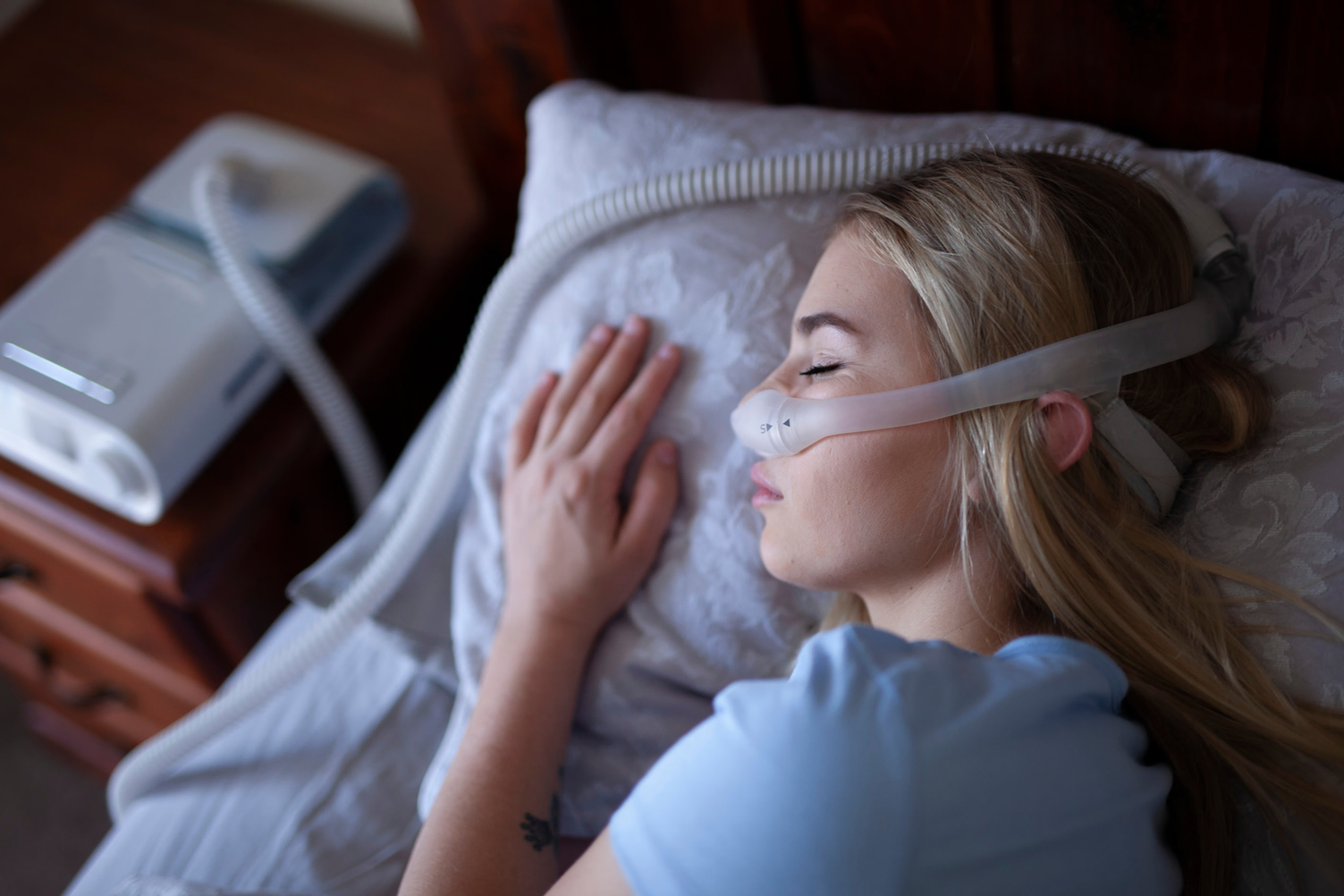
- CPAP: this device creates positive air pressure, reversing the mechanics of breathing. In other words, instead of the lungs creating negative pressure to “pull” air in, the CPAP creates external positive pressure and “pushes” air into the body.
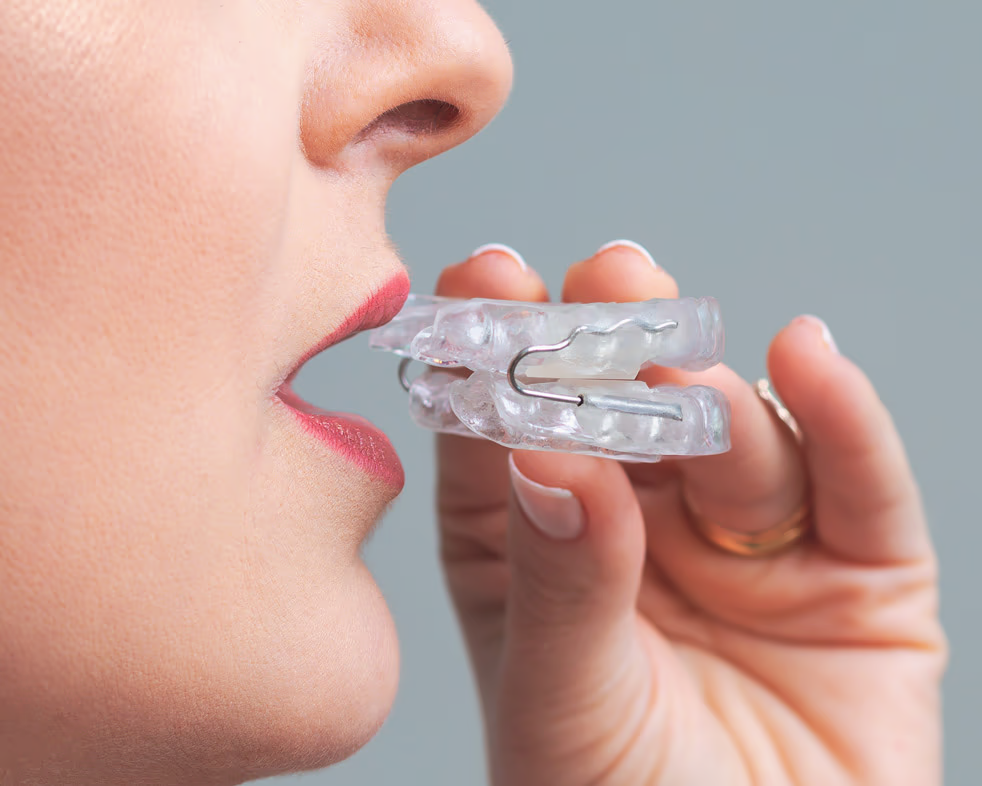
- Oral appliance: this device pulls the lower jaw forward and repositions the tongue and pharynx, keeping the airway open.
- Speech therapy: through specific exercises for the tongue, palate, pharynx, neck, and chest, it is possible to strengthen the muscles and help maintain a clear airway that favors the passage of air.

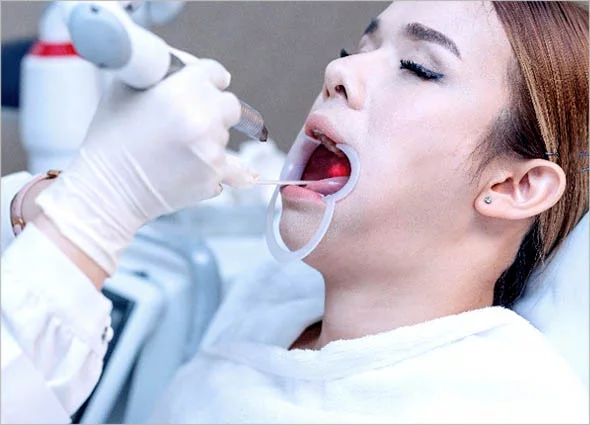
- Fotona laser: stimulates collagen production and the tightening of throat tissues to open the airway
- Surgery: by removing and repositioning various structures, it provides a wider airway that withstands the pressure of breathing, keeping air flowing through it
Sleep apnea surgery: How is it performed? What are the results?
A key concept: it is not just one surgery, it is several
Surgery is an important option for patients who have not adapted to CPAP or other treatments. CPAP is the first-line treatment and is very effective when well tolerated, but between 30% and 50% of people do not adapt to it or abandon the device over time, and that is where surgery has a role. What many people do not realize is that this is not a single surgery, but rather a set of procedures performed at the same time, each directed at a specific point of the upper airway.
The Concept of Multiple Procedures
The main goal of surgical treatment for sleep apnea is to keep the airway open during sleep. Because obstructive events can occur at different levels of the upper airway (nose, palate, lateral pharyngeal walls, and base of tongue), the most effective surgical approach involves treating multiple areas at the same time. This combined strategy has been shown to produce better results compared with treating a single site of obstruction.
Nasal Level: Clearing the Upper Airway
Septoplasty: Correction of a Deviated Septum
Correcting a deviated nasal septum is often the first step in multilevel surgery. A deviated septum can increase resistance to airflow through the nose and encourage mouth breathing during sleep, which worsens snoring. It is worth being clear about the role of the nose: nasal obstruction tends to worsen snoring and make CPAP use more difficult, but correcting the nose alone rarely cures apnea. It improves breathing, snoring, and often CPAP tolerance, which is why it is usually the first step of a multilevel surgery.
During septoplasty, we make a small incision inside the nose, where the mucosa is lifted away from the cartilage and bone of the septum. The deviated portions are then removed or repositioned to center the nasal septum. This procedure significantly improves nasal airflow and reduces the tendency toward mouth breathing during sleep.
Turbinoplasty: Reduction of the Nasal Turbinates
Surgery on the nasal turbinates is often performed together with septoplasty. Enlarged turbinates can cause chronic nasal obstruction, forcing the patient to breathe through the mouth during sleep, which destabilizes the upper airway. Turbinoplasty aims to reduce the volume of the inferior turbinates while preserving their physiological function of filtering and humidifying the air.
Ethmoidectomy and Maxillary Sinus Surgery
When necessary, we also perform ethmoidectomy and maxillary sinus surgery. Ethmoidectomy involves removing inflamed tissue, polyps, or blockages in the ethmoid sinuses that prevent proper ventilation. This procedure, performed using an endoscopic technique, ensures precision and minimizes the surgical impact. Maxillary sinus surgery complements the treatment when the maxillary sinuses are affected, ensuring proper drainage and reducing recurrent infections that may contribute to nasal obstruction.
In addition, combining this procedure helps create a second airflow pathway that can reduce airway resistance, contributing to the success of the surgery as a whole.
Palatal Level: Enlarging the Retropalatal Space
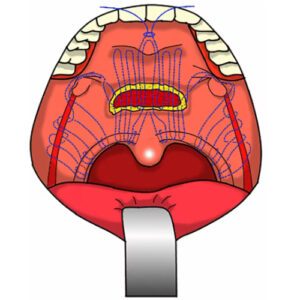
Barbed Reposition Pharyngoplasty to Open the Palate
Barbed reposition pharyngoplasty is a modern, minimally invasive technique for treating the soft palate. This technique uses special sutures with small bidirectional barbs that reinforce and stabilize the throat tissues, improving the tension of the upper airway.
Each barb of the suture acts as a knot anchored in the tissue, providing greater airway stability with shorter operating time and better healing. This approach is particularly effective for patients whose snoring is caused by excessive relaxation of the palatal tissues, offering faster recovery and good results.
Lateral Wall Level: Functional Expansion with the Da Vinci Robot
Functional Expansion Pharyngoplasty with the Da Vinci Robot
A major evolution of this technique is Functional Expansion Pharyngoplasty performed with the Da Vinci robotic system. This procedure combines the principles of traditional expansion pharyngoplasty with the precision and advantages of transoral robotic surgery.
The robotic functional expansion technique uses magnified 3D visualization and articulated instruments with 360-degree movement to reposition the palatopharyngeus muscle. During the procedure, the palatopharyngeus muscle is isolated from the mucosa and from the superior pharyngeal constrictor muscle, and is then divided inferiorly to form a muscle flap with a superior and medial pedicle.
The free end of the palatopharyngeus muscle is then rotated upward and fixed at the junction between the soft and hard palate, creating tension in the lateral pharyngeal wall. The robot allows this fixation to be carried out with millimeter precision, ensuring optimal positioning of the muscle and reducing the risk of complications.
This robotic approach to functional expansion offers advantages over the traditional technique. The three-dimensional visualization allows precise identification of the anatomical structures, while the articulated instruments make it possible to suture at angles that would be impossible with conventional techniques. The result is a more consistent enlargement of the pharyngeal space, with good results in appropriately selected patients.
Base of Tongue Level: Robotic Surgery
Robotic Lingual Tonsillectomy
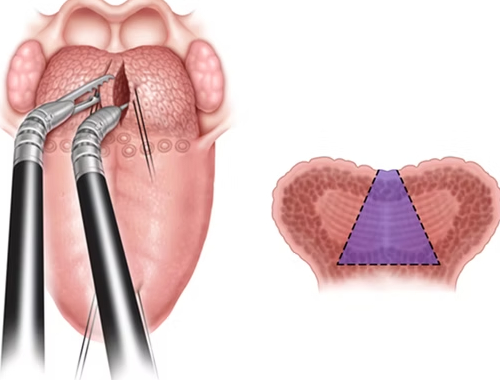
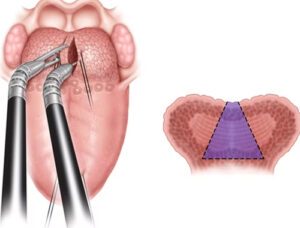
Transoral robotic surgery (TORS) using the Da Vinci system represents the most advanced development in the treatment of base of tongue obstruction.
Robotic lingual tonsillectomy aims to remove enlarged tissue at the base of the tongue, including the lingual tonsils. The procedure may remove up to 20 grams of tissue as needed, based on the patient’s anatomy and the degree of collapse during sleep.
Partial Glossectomy
Midline partial glossectomy complements robotic treatment when there is significant macroglossia. This procedure involves the physical removal of a portion of the tongue in the central area, between the major blood vessels and nerves. The technique is guided by advanced imaging methods to ensure maximum safety and to preserve the essential functions of the tongue.
Advantages of the Combined Approach
Performing these multiple procedures at the same time offers several advantages. First, it makes it possible to treat all levels of obstruction in a single surgical session, reducing the need for subsequent surgeries. In addition, the multilevel approach tends to achieve higher success rates than treating a single site.
Robotic surgery offers specific benefits, including less intraoperative bleeding, faster recovery, and functional preservation with a lower risk of changes in swallowing and speech. The high-definition 3D visualization and the precision of the articulated instruments help prevent bleeding and allow removal of the excess tissue.
Recovery and Results
Recovery varies according to the extent of the procedures performed.
Multilevel surgery improves apnea in most well-selected cases. In meta-analyses, the success rate (a reduction in the AHI of at least half, with a final AHI below 20) is around 60% to 66%, with an average reduction of about 25 events per hour. Barbed reposition pharyngoplasty and robotic base-of-tongue surgery reduce the AHI by around 24 events per hour in the published series. It is worth being transparent: results depend heavily on patient selection and on the site of obstruction, and surgery usually improves symptoms and quality of life considerably, without necessarily eliminating apnea entirely.
Combined surgery for the treatment of sleep apnea therefore represents a comprehensive solution that treats the points of upper airway obstruction at the same time. This multilevel approach offers patients an effective alternative to CPAP, with lasting results and a significant improvement in quality of life.
Frequently asked questions
Does everyone who snores have sleep apnea?
No. Snoring is a warning sign that deserves evaluation, especially if it is frequent or comes with daytime sleepiness, morning headaches, or high blood pressure. The chance of apnea is about 1.5 to 3 times higher in people who snore than in the general population, but snoring by itself is not a diagnosis of apnea.
How is the severity of apnea measured?
By the AHI (apnea-hypopnea index), which counts the pauses in breathing per hour of sleep, measured during polysomnography (the sleep study): up to 5 is normal, 5 to 15 is mild, 15 to 30 is moderate, and above 30 is severe.
Does surgery cure sleep apnea?
In most well-selected cases, surgery greatly improves apnea and quality of life, but it does not always eliminate the problem. Success depends on the site of obstruction and on each patient’s characteristics, which is why a detailed evaluation before surgery is so important.
Do I need to have all of these surgeries?
No. Apnea can cause obstruction at different points (nose, palate, pharyngeal walls, base of the tongue), and surgery is individualized: only what is needed is treated, often in a single surgical session.
Does surgery replace CPAP?
CPAP is the first-line treatment and is very effective when well tolerated. Surgery is the main alternative for those who do not adapt to the device or abandon it, and it is sometimes used in combination with other measures.
References
- Senaratna CV, et al. Prevalence of obstructive sleep apnea in the general population: a systematic review. Sleep Medicine Reviews. 2017;34:70-81.
- Wali SO, Abalkhail B, Krayem A. Prevalence and risk factors of obstructive sleep apnea syndrome in a Saudi Arabian population. Annals of Thoracic Medicine. 2017;12(2):88-94.
- Tufik S, et al. Obstructive Sleep Apnea Syndrome in the São Paulo Epidemiologic Sleep Study (EPISONO). Sleep Medicine. 2010.
- McEvoy RD, et al. CPAP for Prevention of Cardiovascular Events in Obstructive Sleep Apnea (SAVE trial). New England Journal of Medicine. 2016.
Dr. José Eduardo Marcondes, physician, otolaryngologist (ENT). CRM-SP 107.711 (Brazilian medical license) | RQE 43.840 (specialist registration). This content is informational, does not replace a medical consultation, and does not supersede the plan of care defined by your own physician.
Sleep well again.
The diagnosis is individual. Book a consultation and find out what applies to your case.
Read also:
About the author
Dr. José Eduardo Marcondes
Physician, Otolaryngologist (ENT) · CRM-SP 107.711 · RQE 43.840
Trained and completed his residency at Escola Paulista de Medicina (UNIFESP), with more than two decades of experience. Focused on the treatment of snoring and sleep apnea, nasal obstruction, chronic sinusitis, adenoids and tonsils, in adults and children. Member of ABORL-CCF and of the medical staff at Hospital Israelita Albert Einstein, Vila Nova Star and São Luiz.
Learn about his full career → · Schedule a consultation on WhatsApp
Leave a Reply