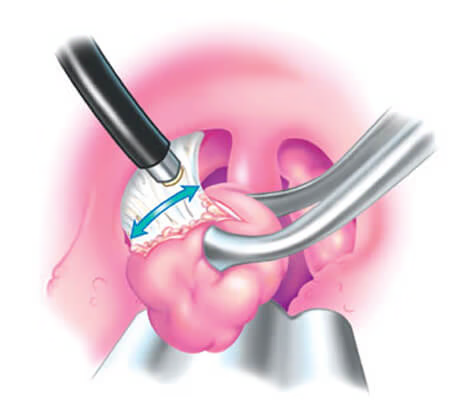
Coblation is a technology that uses radiofrequency in a saline medium to generate a plasma field capable of dissolving tissue precisely and with low heat transfer, helping to preserve surrounding structures. In tonsil surgery, this may allow for less trauma, careful bleeding control, and a more comfortable recovery, with particular emphasis on intracapsular tonsillectomy performed with radiofrequency by coblation.
What is coblation?
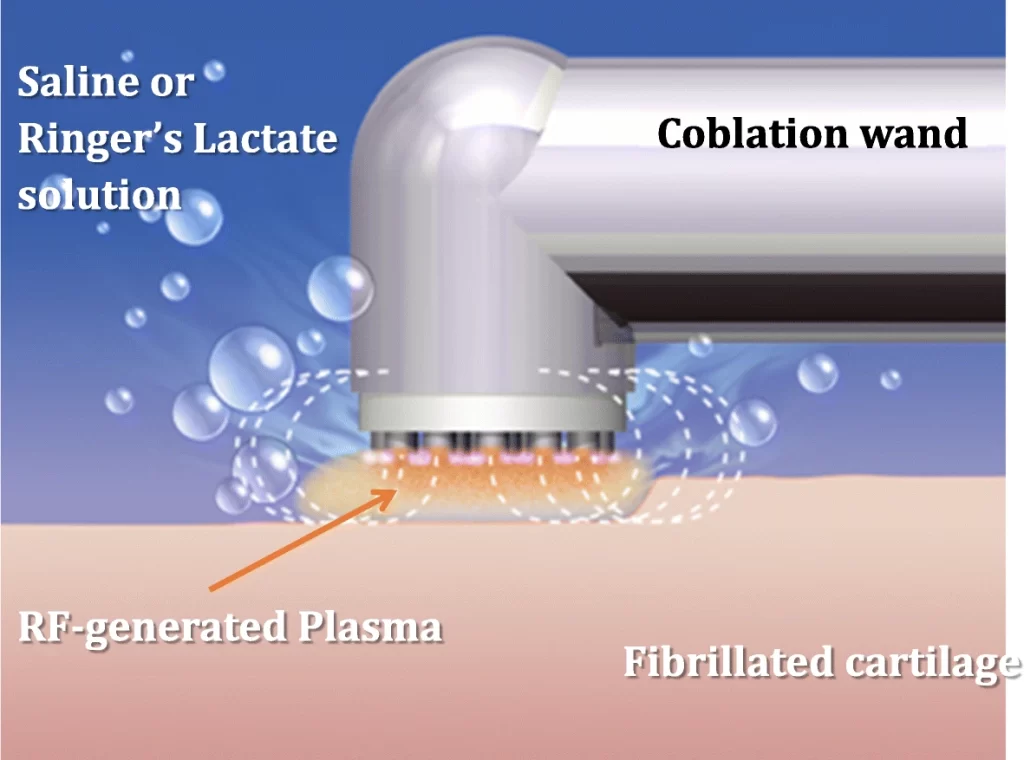
Coblation refers to controlled tissue ablation through a plasma field created at the tip of the instrument in a saline solution. Unlike conventional electrocautery, the energy works at lower temperatures, breaking down the molecular bonds of the tissue rather than burning it, which helps reduce collateral thermal damage and preserve anatomical planes.
How does radiofrequency work?
Radiofrequency is an alternating current that, when interacting with saline solution, forms a stable plasma that fragments the target tissue with excellent hemostasis. Power control and continuous irrigation keep the field clean and cooler, favoring delicate dissection and clear visualization throughout the procedure.
Advantages in tonsil surgery
- Less postoperative pain thanks to low thermal diffusion and the preservation of adjacent mucosa and muscles.
- Less intraoperative and postoperative bleeding due to efficient coagulation of the microvasculature during ablation.
- A faster recovery, with a safe and predictable return to activities.
- Greater precision in delicate areas, helping to reduce edema, exudate, and thick crusting in the tonsillar fossae.
- Less need for additional cauterization, reducing mucosal irritation and postoperative odor.
Intracapsular vs. extracapsular
- Intracapsular tonsillectomy: removes the tonsillar parenchyma while preserving a thin capsular layer, which tends to reduce pain, bleeding, and muscle spasm, keeping the mucosa more intact and supporting healing. It may be especially useful in hypertrophy with sleep-disordered breathing and in patients who prioritize a more comfortable postoperative course.
- Extracapsular tonsillectomy: removes the entire tonsil along with its capsule, indicated when there is refractory recurrent tonsillitis, persistent tonsil stones with halitosis, prior abscesses, or chronic structural changes. It may offer a lower chance of recurrent infection when the focus is predominantly infectious and persistent.
Intracapsular tonsillectomy with radiofrequency
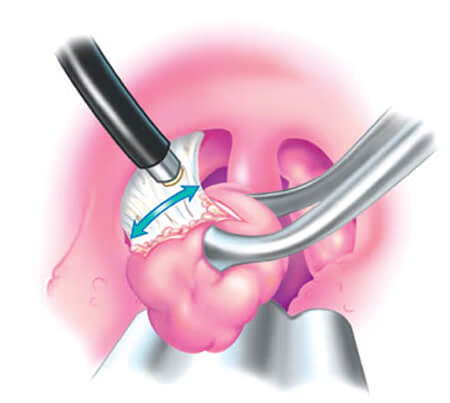
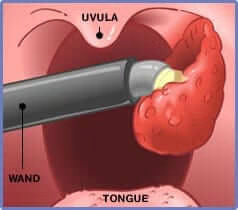
In the intracapsular technique, radiofrequency by coblation makes it possible to reduce tonsil volume in a controlled way, preserving the capsule as a “protective layer” that decreases the exposure of nerve endings and, consequently, pain. The refined thermal control helps minimize injury to the constrictor muscles and keeps swallowing function more preserved, supporting early hydration and feeding. In experienced hands, it may combine consistent functional results for the airway and sleep with a more comfortable and predictable recovery profile.
Who is it indicated for?
Intracapsular tonsillectomy with radiofrequency may be especially indicated for children and adults with tonsillar hypertrophy associated with snoring and sleep apnea, breathing difficulty, impaired swallowing, or an impact on quality of life. It is also suitable for those seeking volume reduction with less pain and a lower risk of bleeding, including patients who need to resume professional and athletic activities more quickly.
Points to consider
Although rare, there may be minimal persistence of deep tonsillar tissue with the possibility of future regrowth in specific situations. When there is a history of significant recurrent infections, intense tonsil stones, or prior abscesses, the extracapsular approach may be considered to more completely eliminate the focus.
What is recovery like?
With general anesthesia and discharge generally on the same day, a structured analgesic plan prioritizes comfort and safety. Preserving the capsule may reduce the intensity of pain, ease hydration and early soft feeding, and lower the risk of delayed bleeding, supporting a smoother recovery. The return to routine is personalized, taking into account the patient’s occupation, sport, and individual needs.
Why choose Dr. José Eduardo Marcondes
With more than two decades of experience, a focus on functional results of the upper airway, and command of energy-based technologies, Dr. José Eduardo Marcondes offers a precise, safe, and personalized approach. Care is provided at leading locations in São Paulo (Itaim and Morumbi) and in Alphaville, combining comfort, current technology, and a team prepared to support every step of care.
Book a consultation
If snoring, sleep apnea, swallowing difficulties, or tonsillar hypertrophy are affecting your well-being, a specialized evaluation can define the best surgical strategy for your case. Book a consultation to calmly discuss whether intracapsular tonsillectomy with radiofrequency is the most appropriate option for your goals and lifestyle.
Dr. José Eduardo Marcondes, physician, otolaryngologist (ENT). CRM-SP 107.711 (Brazilian medical license) | RQE 43.840 (specialist registration). This content is informational, does not replace a medical consultation, and does not supersede the plan of care defined by your own physician.
Sleep well again.
The diagnosis is individual. Book a consultation and find out what applies to your case.
Read also:
About the author
Dr. José Eduardo Marcondes
Physician, Otolaryngologist (ENT) · CRM-SP 107.711 · RQE 43.840
Trained and completed his residency at Escola Paulista de Medicina (UNIFESP), with more than two decades of experience. Focused on the treatment of snoring and sleep apnea, nasal obstruction, chronic sinusitis, adenoids and tonsils, in adults and children. Member of ABORL-CCF and of the medical staff at Hospital Israelita Albert Einstein, Vila Nova Star and São Luiz.
Learn about his full career → · Book a consultation on WhatsApp
Leave a Reply