Fotona Laser (NightLase) for Snoring and Sleep Apnea
If snoring has turned your nights into restless ones (yours or those of whoever sleeps beside you), you have probably wondered: is there a way to treat it without surgery and without continuous positive airway pressure (CPAP)? Treatment with the Fotona laser for snoring, known as the NightLase® protocol, is one such option, and it is already available at our offices.
The laser is not a magic solution, and it is not right for everyone. But for patients with mild to moderate obstructive sleep apnea and for cases of primary snoring, the Fotona laser may be a very suitable option.
What is laser treatment for snoring and apnea?
NightLase® is the Fotona laser platform’s protocol for snoring and apnea, performed in the office. It uses an Erbium laser (Er:YAG) with a wavelength of 2,940 nm in what is known as SMOOTH® mode, a non-ablative application that heats the throat tissues in a controlled way, without cutting, without injuring, and without the need for anesthesia.
The laser targets the soft tissues at the back of the mouth and throat: the soft palate (the roof of the mouth), the uvula, and the walls of the pharynx. These are precisely the tissues that, when they become lax and relaxed during sleep, vibrate and produce snoring and, in some cases, collapse and obstruct the airflow.
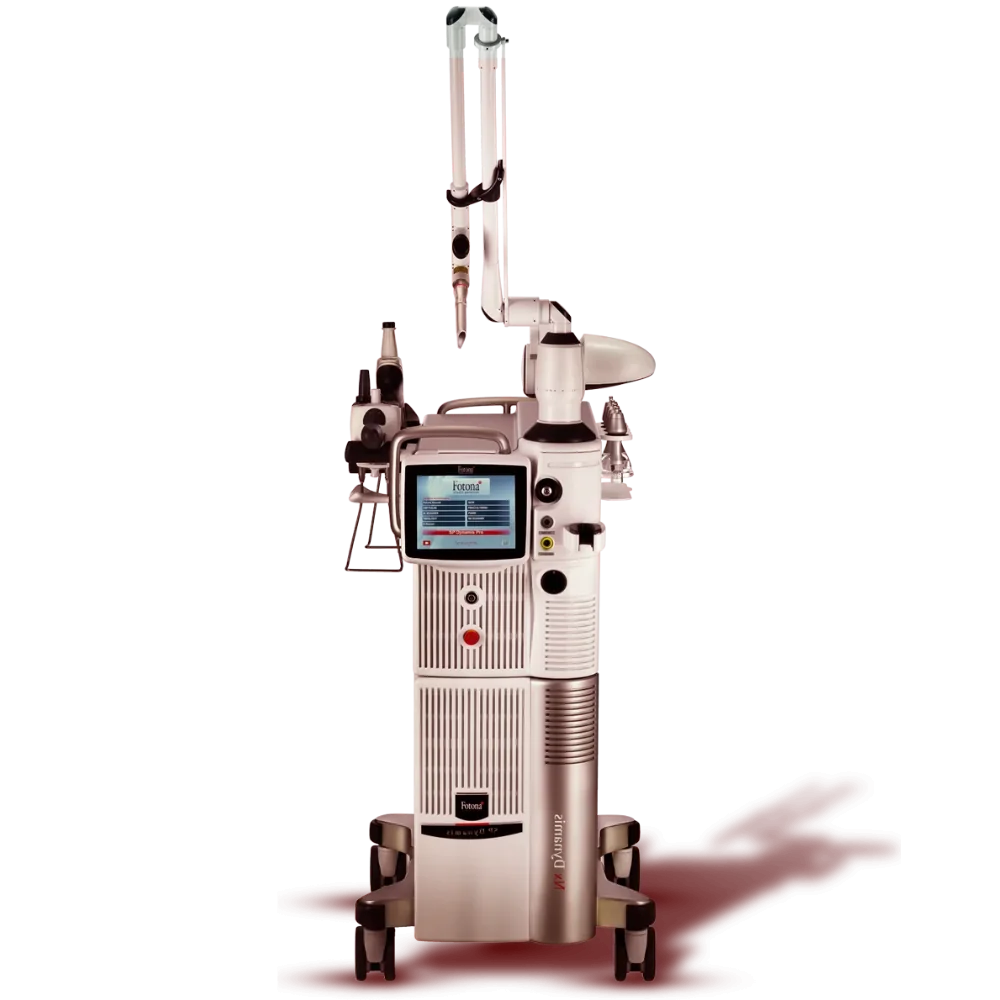
How does the laser act on snoring and apnea?
During sleep, the throat muscles relax and the space through which air passes becomes narrower. In those with laxer tissues, this narrowing favors vibration (snoring) and, in some people, the repeated closing of the airway (apnea).
The laser’s controlled heat acts on these tissues in two ways: it contracts the existing collagen fibers and stimulates the production of new collagen over the following weeks. The expected result is gradually firmer, more toned tissue, with less tendency to vibrate and collapse, which may translate into less snoring and more stable breathing through the night. The entire procedure is done through the mouth, with no incisions and no removal of tissue.
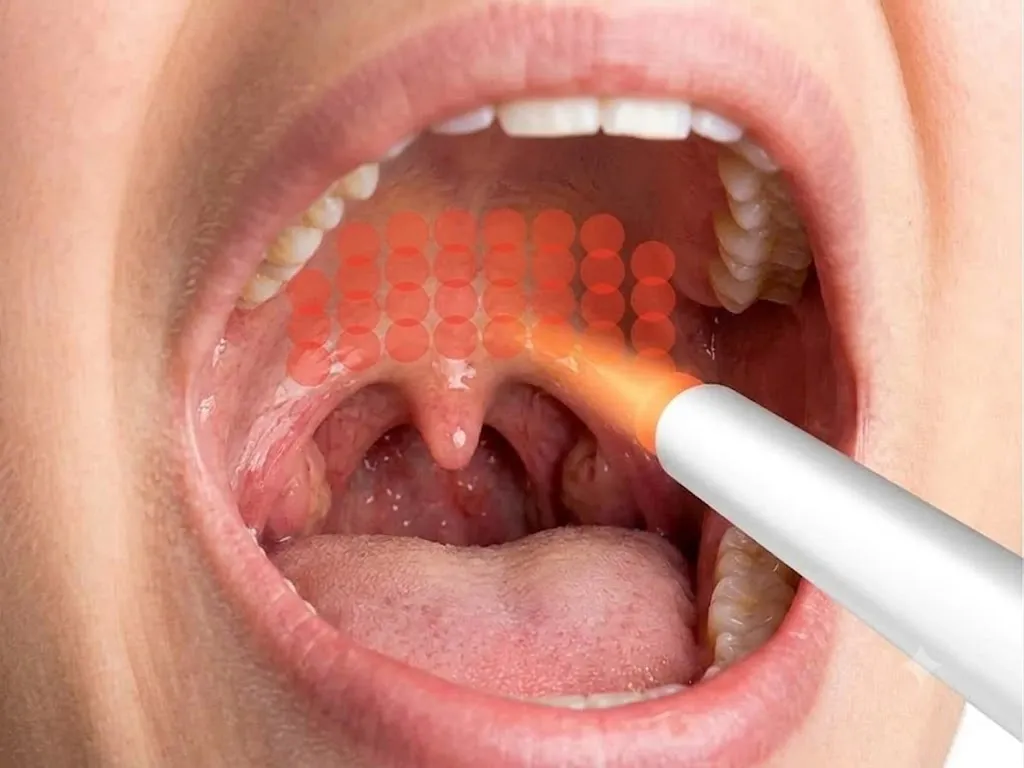
Is the laser right for my case?
Laser treatment is usually considered for:
- adults with persistent snoring that disturbs sleep (their own or that of the person beside them);
- people with mild to moderate obstructive sleep apnea;
- those who have not adapted to, or do not wish to use, a CPAP device;
- those seeking a non-surgical alternative, or who want to postpone surgery;
- situations involving laxity of the throat tissues, including that associated with natural aging or menopause.
It is just as important to say when the laser is not the main path: in severe sleep apnea, the treatment of choice remains CPAP or, in selected cases, surgery. On its own, the laser also does not resolve factors such as nasal obstruction or excess weight, which often contribute to the problem. For this reason, the indication is never automatic: it depends on the assessment of your case.
Diagnosis comes before the laser
Snoring and apnea have varied causes, and there is no single treatment that works for everyone. Before recommending the laser, or any other option, the essential step is to understand what is happening with your breathing and your sleep. This assessment usually includes:
- a detailed conversation about your sleep and your symptoms;
- examination of the airway, often with nasal endoscopy, to check whether a nasal component (such as a deviated septum, enlarged turbinates, or rhinitis) is also getting in the way;
- when indicated, polysomnography (the sleep study), which confirms the diagnosis and grades the severity of the apnea.
From there, it is possible to determine whether the laser is the best option, used alone or combined with other measures such as treating the nose, lifestyle changes, an oral appliance, CPAP, or surgery. The goal is to treat the cause, not just to silence the symptom.
What is a session like, and how many are needed?
- It is an outpatient procedure, performed in the office.
- Each session lasts, on average, 20 to 30 minutes.
- It is painless and requires no anesthesia; most people feel only a mild sensation of warmth in the throat.
- There are no incisions and no recovery time: you return to your activities the same day.
The most commonly used protocol consists of about four sessions, performed every 20 to 30 days. The exact number and the interval between sessions may vary according to the assessment of each case.
What results can you expect, and for how long?
Because part of the effect depends on the formation of new collagen, the results are progressive: they tend to develop over the weeks following the sessions. Many people report a reduction in snoring and the feeling of more restful sleep.
In any case, the response is individual and varies from person to person; to maintain the benefits, a maintenance session is usually needed within a period that generally ranges from 8 to 12 months. Nor does the laser remove the need to address the other factors involved (weight, alcohol at night, nasal obstruction) or to follow up over time.
These findings are supported by the medical literature. A systematic review with meta-analysis published in 2025 concluded that the Erbium laser is “a safe and effective option in the short and medium term for selected patients with snoring or mild to moderate apnea,” with benefits that usually last 1 to 2 years. A randomized, placebo-controlled clinical trial also demonstrated a significant reduction in snoring with the NightLase protocol, well tolerated and without relevant complications. It is worth noting, in the interest of transparency, that the improvement tends to be clearer in the symptoms reported by the patient than in objective sleep tests, which reinforces the importance of reassessment and of maintenance sessions.
Advantages and limits of the laser
On the plus side, the laser is:
- non-invasive (no cuts, no anesthesia, and no hospital stay);
- painless and with no recovery time (no downtime);
- quick and performed in the office;
- free of any device to wear during sleep;
- repeatable and combinable with other treatments.
And the limits:
- it works best for snoring and mild to moderate apnea, but it is not the treatment of choice for severe apnea;
- results vary from person to person and are not permanent;
- on its own, it does not correct nasal causes or excess weight.
Understanding both sides is what allows you to make the best decision.
Does the laser replace CPAP or surgery?
It depends. For snoring and mild to moderate apnea, the laser can be an alternative or a complement to other measures. In moderate to severe apnea, CPAP remains the most established treatment, and there are also surgical options for selected cases, such as transoral robotic surgery (TORS) and barbed reposition pharyngoplasty (BRP). Where the nose is part of the problem, treating it with septoplasty or turbinoplasty may be what is missing for sleep to improve. Which combination is best for you is, again, an individual decision, made on the basis of the diagnosis and a careful assessment.
Frequently asked questions
Does laser treatment for snoring hurt?
No. The procedure is painless and requires no anesthesia. Most people feel only a mild sensation of warmth in the throat during the application.
How many sessions are needed?
In general, about four sessions over roughly three months. The exact number may vary according to the assessment of each case.
Do I need time off after the session?
No. Since there are no incisions and no recovery, you can return to your routine the same day.
Does the laser cure sleep apnea?
The laser can reduce snoring and help in cases of mild to moderate apnea, but apnea is a condition that usually requires ongoing follow-up. In moderate to severe cases, other treatments remain necessary.
Does the laser replace CPAP?
Not always. In mild to moderate apnea, it can be an alternative or a complement. In moderate to severe apnea, CPAP or surgery remain the treatment of choice. The decision depends on polysomnography, the anatomy, and an individual assessment.
Are the laser's results permanent?
The results are long-lasting but not permanent. They usually last around 8 to 12 months and can be renewed with maintenance sessions.
Who cannot have laser treatment?
Some situations (such as pregnancy or active lesions and infections in the mouth and throat, among others) may contraindicate the procedure. That is why the indication is always made after a medical evaluation.
Is the laser suitable for any type of snoring or apnea?
No. The laser works best for snoring and mild to moderate apnea. More severe cases, or those with other causes (such as significant nasal obstruction or excess weight), may require different or combined approaches.
It is worth talking about your case
If snoring or apnea have been disrupting your rest, the first step is an assessment that identifies the origin of the problem and determines whether your case is eligible for this treatment. After weighing the benefits and the limits, we decide together whether laser treatment can be one part of this plan.
Dr. José Eduardo Marcondes is a physician and otolaryngologist (ENT) (CRM SP 107711 | RQE 43840), working in nasal surgery and in the treatment of snoring and sleep apnea, seeing patients in Morumbi and Itaim (São Paulo) and in Alphaville (Barueri). If it makes sense for you, book a consultation so we can talk about your case.
References
- Dembicka-Mączka D, et al. Effectiveness of the Er:YAG Laser in Snoring Treatment Based on Systematic Review and Meta-Analysis Results. Journal of Clinical Medicine. 2025;14(12):4371. doi:10.3390/jcm14124371.
- Picavet VA, et al. Treatment of snoring using a non-invasive Er:YAG laser with SMOOTH mode (NightLase): a randomized controlled trial. European Archives of Oto-Rhino-Laryngology. 2022;280(1):307–312. doi:10.1007/s00405-022-07539-9.
- Frelich H, et al. Erbium:Yttrium Aluminum Garnet (Er:YAG) Laser: A Minimally Invasive Treatment Method in Selected Patients with Impaired Breathing During Sleep: The Assessment of Treatment Effectiveness After 4 Years. Photobiomodulation, Photomedicine, and Laser Surgery. 2023;41(8):415–421. doi:10.1089/photob.2022.0144.
This content is informational and does not replace a medical consultation.