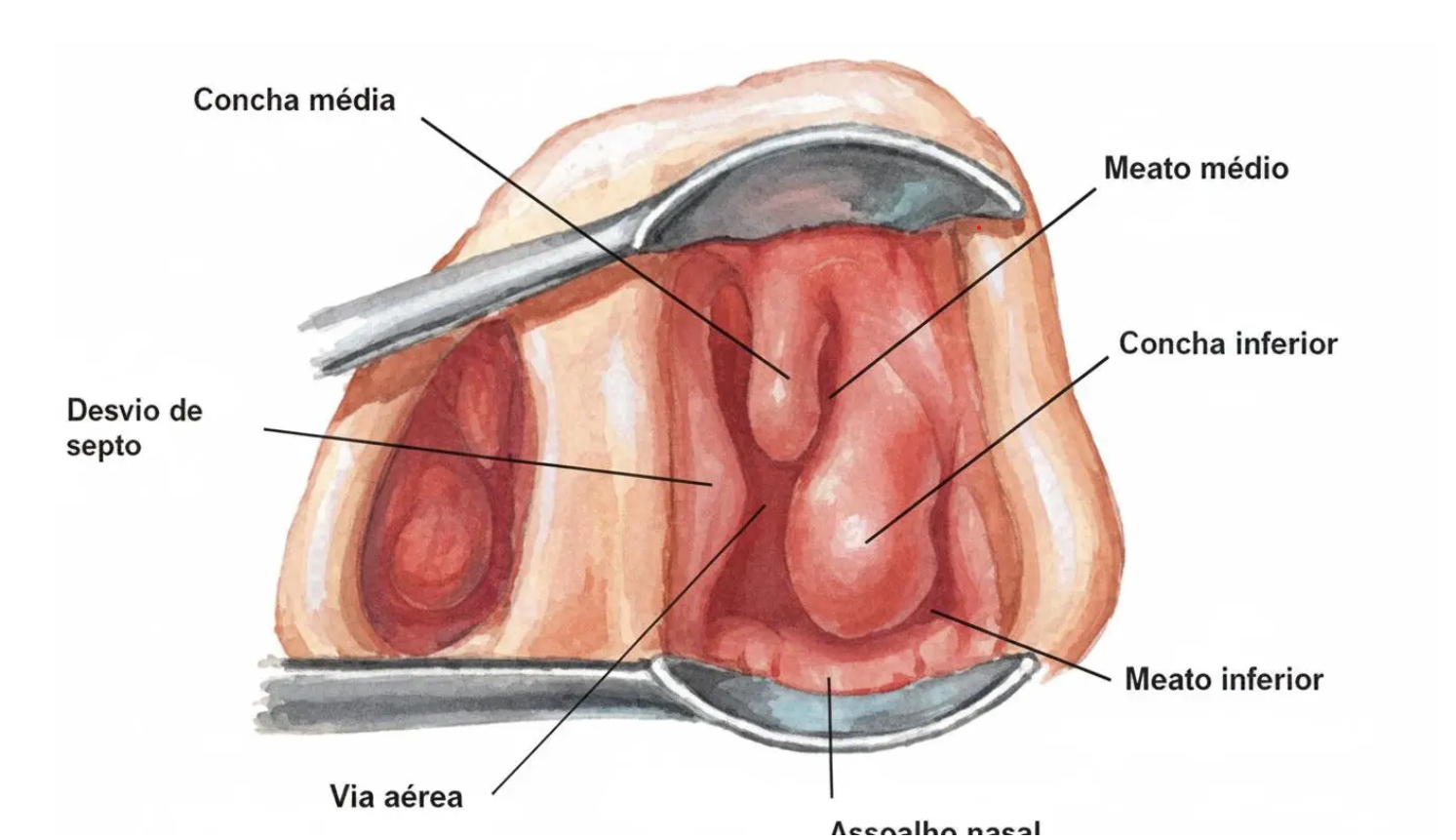
The nasal turbinate is a bony structure covered by mucosa located on the lateral wall of the nose, responsible for warming, humidifying, filtering, and directing the air we breathe. These functions are essential for efficient, comfortable breathing in everyday life.
Also known as the nasal concha or turbinate, it is part of the nasal cavity and is made up of bone covered by respiratory mucosa.
There are normally three turbinates on each side (inferior, middle, and superior) and, in some people, a fourth one may be present, called the supreme turbinate.
How do they help with breathing?
The aerodynamic shape of the nasal turbinates directs the airflow inside the nose, promoting a steady, quiet passage of air. Part of this flow is channeled toward the paranasal sinuses and the olfactory region, allowing us to perceive smells.
The “levels” of the nose
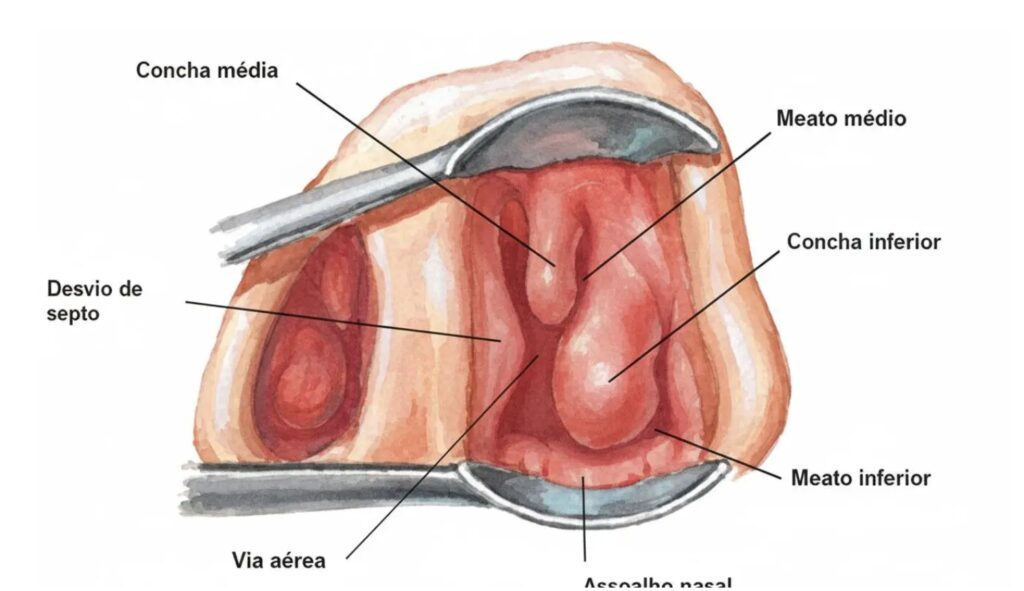
The turbinates divide the nasal cavity into meatuses, known as the “levels” of the nose: inferior, middle, and superior. In the inferior meatus, the inferior turbinate, the largest and with a rich vascular network, regulates the nasal cycle and takes part in warming and humidifying the air, and it also houses the nasolacrimal duct, through which tears drain. In other words, our tears drain into the nose, which is why the nose becomes congested when we cry.
The middle meatus contains the openings of the paranasal sinuses and tends to accumulate secretions during infections, sinusitis, and allergic processes.
The olfactory nerve, responsible for our sense of smell, is located in the superior meatus. Only a small part of the air we breathe reaches this region.
When do the nasal turbinates enlarge?
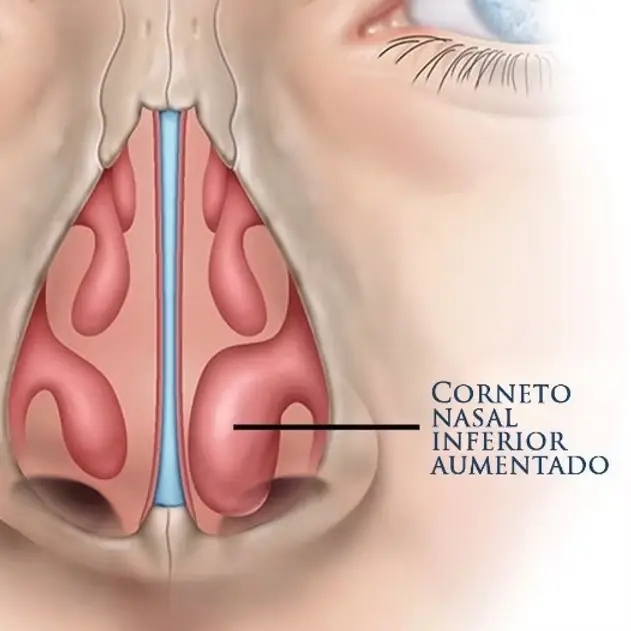
Several conditions can lead to enlargement (hypertrophy) of the turbinates and cause nasal obstruction, such as:
- Rhinitis – causes chronic inflammation of the mucosa
- recurrent sinusitis – infectious processes also lead to persistent inflammation of the mucosa
- environmental irritants – pollutants such as sulfur, ozone, smoke particles, among others
- anatomical changes – such as a deviated nasal septum, nasal polyposis, and enlarged adenoids
- vascular causes – vasomotor rhinitis can also lead to enlargement of the turbinates
In adults, turbinate enlargement is often associated with other conditions, especially a deviated septum, and this combination is one of the main causes of chronic nasal congestion.
Consequences of enlarged turbinates
As we have seen, each level of the nose is responsible for a specific function, and enlargement of the nasal turbinates can interfere with each of them. The most common symptom of this enlargement is nasal obstruction, which occurs when the “lower level” is blocked. When the “second level” (known as the middle meatus) is affected, the main symptoms are related to sinus disorders, more specifically chronic sinusitis. The “third level,” the superior meatus, can lead to a reduced sense of smell.
Beyond obstruction, turbinate hypertrophy may contribute to snoring, sleep apnea, and a lower quality of breathing-related life. A feeling of being constantly congested, the need to breathe through the mouth, and worsening at night are common complaints that warrant specialized evaluation.
Medical treatment
The first line of care aims to reduce inflammation and the size of the turbinates with nasal corticosteroid sprays and antihistamines, as recommended by the otolaryngologist (ENT). Nasal rinsing with saline solution helps complement symptom control, and decongestants should be used with caution and for a limited time to avoid a rebound effect.
Surgical treatment
When symptoms persist or there is significant obstruction, procedures such as turbinoplasty (reduction while preserving the mucosa) or turbinectomy (partial/total removal) may be indicated, decided on a case-by-case basis. Turbinate surgery is frequently combined with septoplasty when there is a deviated septum, in order to widen the airway while maintaining mucosal function.
When to seek care
Persistent nasal obstruction, worsening sleep, snoring, or a poor response to home treatments are signs to see an otolaryngologist and discuss personalized options, ranging from medical measures to functional surgery.
In São Paulo or Barueri, you can schedule a specialized evaluation to help define the best strategy to breathe better with safety and comfort.
Schedule your evaluation
For individualized guidance and well-grounded treatment decisions, schedule a consultation with Dr. José Eduardo Marcondes in São Paulo or Barueri and learn about the approaches that may help restore nasal airflow while preserving function. Efficient breathing and quality of life go hand in hand when technical expertise and empathy work in harmony.
Dr. José Eduardo Marcondes, physician, otolaryngologist (ENT). CRM-SP 107.711 (Brazilian medical license) | RQE 43.840 (specialist registration). This content is informational, does not replace a medical consultation, and does not supersede the plan of care defined by your own physician.
Sleep well again.
The diagnosis is individual. Book a consultation and find out what applies to your case.
Read also:
About the author
Dr. José Eduardo Marcondes
Physician, Otolaryngologist (ENT) · CRM-SP 107.711 · RQE 43.840
Trained and completed his residency at Escola Paulista de Medicina (UNIFESP), with more than two decades of experience. Focused on the treatment of snoring and sleep apnea, nasal obstruction, chronic sinusitis, adenoids and tonsils, in adults and children. Member of ABORL-CCF and of the medical staff at Hospital Israelita Albert Einstein, Vila Nova Star and São Luiz.
Read the full background → · Schedule a consultation on WhatsApp
Leave a Reply