What are the paranasal sinuses
The paranasal sinuses are air-filled cavities within the bones around the nose — maxillary, frontal, ethmoid and sphenoid — lined by a mucous membrane that produces mucus to filter and humidify the air and to help protect the airway. Beyond this protective role, they act as resonance chambers for the voice and help reduce the weight of the facial bones; when mucous drainage becomes obstructed, the cycle of inflammation and infection typical of rhinosinusitis sets in.
Acute sinusitis vs. chronic sinusitis: the essential difference
Acute rhinosinusitis usually accompanies a cold, lasts up to 4 weeks and, in most cases, resolves with supportive care; when symptoms worsen after 5 days or persist beyond 10 days, a non-viral form should be considered.
The chronic form, more accurately called chronic rhinosinusitis, persists for more than 12 weeks, with symptoms such as nasal obstruction and discharge, and may include facial pressure and a reduced sense of smell, with confirmation by endoscopy and, when indicated, a CT scan.
Main causes and associated factors
- Sustained inflammation of the mucosa from allergies or viral, bacterial or fungal infections may trigger and perpetuate the chronic condition.
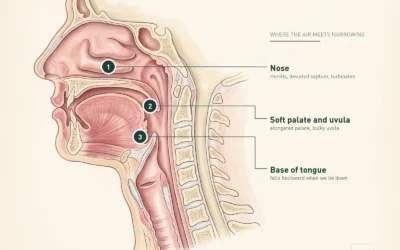
- Anatomical alterations, such as a deviated septum and narrowing of the middle meatus, can compromise ventilation and drainage, favoring recurrence.
- Nasal polyps and immune-related conditions contribute to mechanical obstruction and type 2 inflammation, increasing resistance to medical treatment alone.
Symptoms that deserve attention
Nasal obstruction/congestion and anterior discharge or post-nasal drip are central to the diagnosis; a reduced sense of smell and facial pressure or pain are common.
A nighttime cough may predominate, especially due to secretions draining into the airway, and fatigue is common in long-standing cases.
Accurate, individualized diagnosis
The assessment begins with a detailed clinical history and nasal rhinoscopy/endoscopy, which documents inflammation, purulent secretion, swelling or polyps. A CT scan is indicated when initial medical treatment fails, in order to map the disease and guide the surgical approach when needed.
Structured medical treatment
- Daily intranasal corticosteroids and hypertonic or isotonic saline irrigation form the foundation for reducing swelling and biofilm and improving mucociliary clearance.
- In bacterial flare-ups, oral antibiotics may be considered; in selected cases, a short course of systemic corticosteroids can help control the inflammation.
- Antihistamines and management of allergic and asthmatic comorbidities optimize results and reduce relapses; the use of topical decongestants should be careful to avoid a rebound effect.
When surgery is indicated
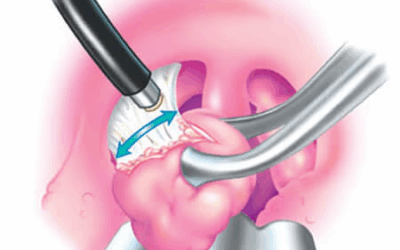
Functional endoscopic sinus surgery (FESS) is indicated when there is refractoriness to optimized medical treatment, the presence of extensive polyps, or significant anatomical obstruction.
Evidence shows substantial improvement in symptoms, quality of life and objective findings after surgery; even so, maintenance with topical therapies remains essential for long-term control.
The role of biologics in nasal polyps
In chronic rhinosinusitis with polyps and type 2 inflammation, biologics such as anti-IgE and anti-IL-4/13 agents may reduce polyp volume, secretion and the need for revision surgery in suitable patients.
Strategies combining endoscopic surgery and biologics have shown complementary benefit, with sustained improvement in symptoms and on endoscopy.
Daily care and prevention
Nasal irrigation with saline solution and the correct use of topical corticosteroids reduce flare-ups and keep the mucosa healthy over time.
Controlling allergens, staying hydrated, getting the influenza vaccine and humidifying the environment during dry periods help minimize seasonal exacerbations.
When to schedule a specialist consultation
Symptoms persisting for more than 12 weeks, loss of smell, multiple episodes per year, or worsening after the usual therapies all warrant an evaluation with an otolaryngologist (ENT) for endoscopy and an individualized plan.
In São Paulo, an integrated approach — rigorous diagnosis, optimized medical treatment and, when necessary, endoscopic surgery — offers consistent relief and helps restore quality of life in a safe and predictable way.
Read also:
About the author
Dr. José Eduardo Marcondes
Otolaryngologist (ENT) · CRM-SP 107.711 · RQE 43.840
Trained and a former resident at Escola Paulista de Medicina (UNIFESP), with more than two decades of experience. A pioneer in the use of robotic surgery (TORS) for sleep apnea. Member of the clinical staff at Hospital Albert Einstein, Vila Nova Star and São Luiz. Member of ABORL-CCF.
Discover the full story → · Schedule an appointment on WhatsApp