If you have spent sleepless nights holding your child as they cried from an earache, and later noticed that, even without pain, they did not seem to hear well, turned the television up louder, or seemed distracted at school, you know the worry that brings you to this question. When ear infections keep coming back, or when fluid stays trapped behind the eardrum for a long time, the otolaryngologist (ENT) may suggest placing a ventilation tube, also called a tympanostomy tube. Here I have gathered the questions I hear most in the office, along with what the science shows today, so you can understand why, when, and whether this “little tube” makes sense for your child. Let me say something reassuring up front: in most cases the treatment is medical or watchful waiting, and not every child who gets ear infections will need the tube. That feeling of a blocked ear also shows up, briefly, when flying.
First, understand what the tube solves (and what it does not)
The target of treatment is the fluid trapped in the middle ear, the space behind the eardrum. It can build up after an infection (called otitis media with effusion, or OME, when there is fluid without active infection) or come along with repeated infections. While this fluid is there, the eardrum vibrates poorly and sound arrives muffled, as if the child had a blocked ear. Hence the hearing loss, ringing in the ears (tinnitus), and sometimes trouble with balance. Recurrent ear infections are a common cause of hearing loss in children.
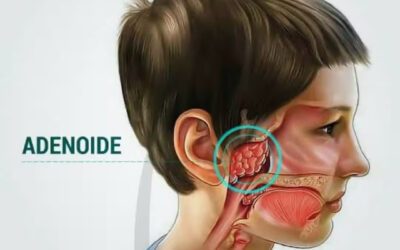
It helps to put this in perspective, because it is less frightening once you know the whole picture. Fluid in the ear is common and, most of the time, clears on its own: about 9 in 10 children have at least one episode before age 5, half resolve within 3 months, and about 95% within a year (AAO-HNS, 2016). That is why the tube is not for every bit of fluid that appears. It comes into play when the fluid insists on staying and starts to affect hearing, or when ear infections are too frequent. What the tube does is drain that fluid and ventilate the ear, equalizing pressure. What it does not do is cure the allergy, the enlarged adenoid, or the cold behind the problem; for the cause, the treatment is different.
So, when is the tube really indicated?
Two situations concentrate the indication, and in both the ear exam matters more than the infection count alone:
- Persistent fluid. Otitis media with effusion in both ears for three months or more, with documented hearing difficulty, is the best-established indication (AAO-HNS, 2022). When there are signs of impact on speech, learning, or behavior, the indication is stronger.
- Recurrent ear infections, with an important caveat. Recurrent otitis media means three or more episodes in six months, or four in a year. The tube is indicated mainly when there is still fluid in the ear at an exam done between episodes; if the ear is completely dry in that period, current guidelines do not recommend the tube based on the infection count alone (AAO-HNS, 2022).
Why the caution? Because a randomized trial published in 2021 compared placing the tube with continuing medical treatment in children with recurrent ear infections and found no difference in the number of new infections over two years (1.48 vs. 1.56 episodes per child-year). The tube did have one gain: it lengthened the time until the next infection (about 4.3 vs. 2.3 months) (Hoberman, 2021). In other words, the decision is not automatic. It weighs the whole picture: hearing, the presence of fluid, the frequency of episodes, and how much all of this affects your child’s sleep, speech, and school.
Outside these situations, when the fluid is recent (less than three months) and hearing is preserved, the usual approach is to observe, because the chance of resolving on its own is high.
What is the surgery like, and is the anesthesia safe?
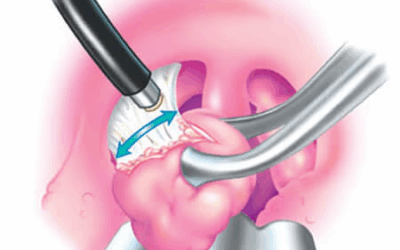
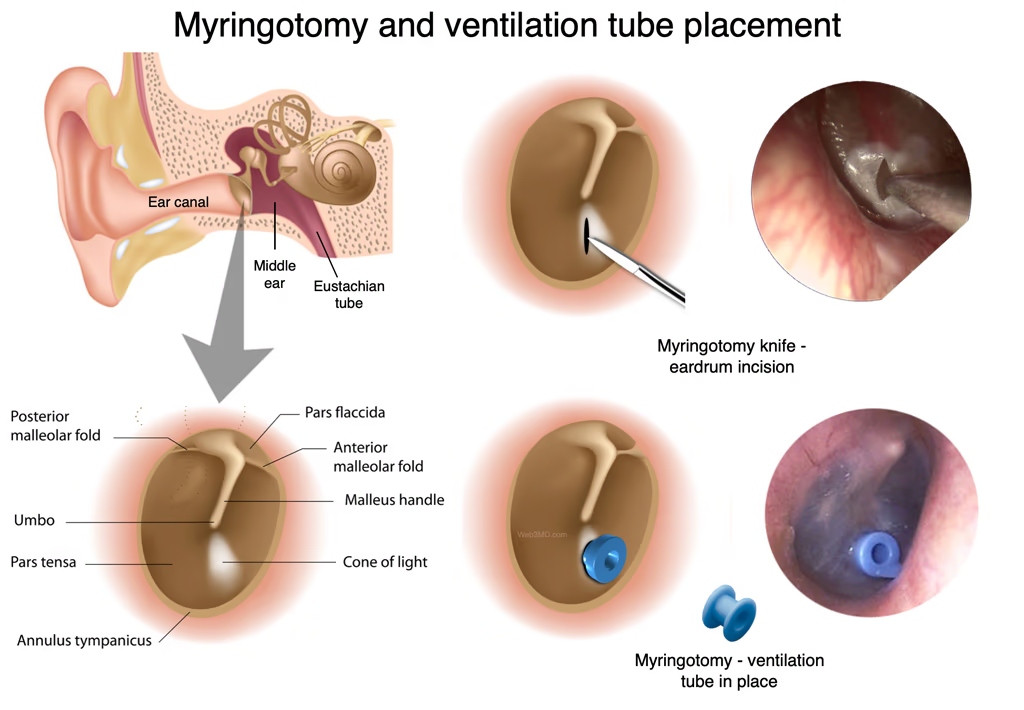
With the help of an endoscope, the doctor makes a small opening in the eardrum, suctions the fluid, and inserts the little tube, which works like a valve, letting air in and fluid out. It usually takes 10 to 15 minutes per ear, and in most cases the child goes home the same day.
The question that worries parents most is almost never about the tube, but about the anesthesia. In children we use general anesthesia, and the concern is natural. It is worth knowing that a large international randomized study followed children who received less than one hour of general anesthesia as infants and found no difference in neurological development at age 5 compared with those who did not (GAS, McCann, 2019). It is a short surgery, performed by a team used to operating on children, and this finding usually brings families peace of mind.
Will it hurt? What is recovery like?
During the surgery, thanks to the anesthesia, there is no pain. Afterward, mild discomfort or a thin discharge from the ear is common in the first few days, but nothing that usually disturbs sleep or stops play. For comfort, we recommend a simple pain reliever. If discharge appears, treatment is local, with ear drops; in most cases oral antibiotics are not needed (AAO-HNS, 2022). Within a few days the strange sensation fades, and many families notice right away that the child responds again when called. When the fluid drains, hearing improves.
Water in the ear: what has really changed
This is the point that raises the most questions, because the guidance changed. For many years, strict water protection was advised, with cotton, plugs, and caps for every bath and every pool. The most recent guidelines revised this: for most children with a tube, routine protection is not needed for ordinary bathing or for swimming in clean, treated water (AAO-HNS, 2022). Studies showed that systematic protection did not meaningfully reduce the chance of discharge.
Protection is now reserved for specific situations, such as diving deep, swimming in lake or poorly treated water, dunking the head in a soapy bath, or when the child feels discomfort from water getting in. Since every case has its particulars, your ENT will advise what applies to your child. The practical good news is that, most of the time, the bath and pool routine stays almost normal.
How long the tube stays and what to expect from the results
The tube usually stays in place for about 12 months on average, until the membrane heals around it. When the time comes, the body expels it naturally, without another surgery, and the tiny hole closes on its own in the great majority of cases. That is why follow-up visits matter: they confirm that it came out properly and that the eardrum is healthy.
As for the results, hearing usually improves quickly, and reviews of the evidence show a clear gain in the short and medium term (MacKeith, 2023).
In some cases, when improvement is incomplete, a new tube placement is needed. The main risk factors for this are early tube extrusion, craniofacial changes, younger age, and some clinical conditions such as recurrent acute otitis media (Goel, 2021). One factor that reduces the chance of another surgery is adenoidectomy performed together with tube placement, especially in children aged 4 and older (Qian, 2025); in a meta-analysis, concurrent adenoidectomy roughly halved the chance of needing new tubes (Goel, 2021).
Risks and sequelae, with numbers
This is a low-risk procedure, but, like any surgery, it has possible complications. The numbers help put them in scale (Kay, Nelson, and Rosenfeld, 2001):
- Ear discharge (otorrhea): the most common, around 16% in the immediate postoperative period, almost always resolved with ear drops.
- Eardrum scarring (tympanosclerosis): appears in about a third of cases after the tube comes out, but is usually just a mark, with no noticeable effect on hearing.
- Perforation that does not close on its own: uncommon with short-term tubes (about 2%) and more frequent with long-term tubes; when it occurs, it can be corrected with a small repair.
- Cholesteatoma: very rare (below 1%).
The tube can also become blocked or come out early, situations that are monitored in the office, where the doctor decides whether it needs to be replaced.
Are there alternatives to the tube?
Yes, and they are part of the conversation. When the fluid is recent and hearing is good, the best approach is usually to wait and reassess, because the chance of spontaneous resolution is high. Treating what lies behind the problem helps: controlling allergic rhinitis, managing repeated colds, and assessing the adenoid. In some children, especially from age 4 or when there are adenoid symptoms, removing the adenoid together with tube placement reduces the chance of new episodes (AAO-HNS, 2022). Antibiotics have a role in treating acute episodes but are not recommended as ongoing prevention. Which path makes sense depends on the exam, the hearing, and your child’s history.
In the end, the decision about the tube is shared between you and the doctor, looking at hearing, the frequency of episodes, and the impact on the child’s daily life. When well indicated, it restores good hearing, improves sleep and energy, and breaks a cycle of infections that interferes precisely with the stage of learning to speak and socialize. If any doubt remains, schedule a conversation so we can assess the case calmly. At the office of Dr. José Eduardo Marcondes, an otolaryngologist (ENT physician, CRM SP 107711 | RQE 43840), guidance is always individualized, so you can decide with confidence and information.
Frequently asked questions
Can my child swim and bathe with the tube?
In most cases, yes, with no routine protection for ordinary bathing or for swimming in clean, treated water. Current guidelines no longer recommend plugs and caps for all children (AAO-HNS, 2022). Protection is reserved for specific situations, such as deep diving or poorly treated water, and your ENT advises what applies to your case.
Does the surgery hurt? And is general anesthesia safe?
There is no pain during the procedure, thanks to the anesthesia. It is a short surgery, a few minutes per ear. As for general anesthesia, a large randomized study showed that less than one hour of anesthesia early in life did not change children’s neurological development at age 5 (GAS, McCann, 2019).
Does the tube fall out on its own? Is another surgery needed to remove it?
In general the tube stays about 12 months and the body expels it naturally, without a new surgery. What matters is keeping the follow-up visits to confirm it came out and to check the eardrum.
Once placed, does it solve the problem for good?
It usually resolves the infections and hearing loss of that period. But some cases need a second tube later on, especially when the tube comes out early, in a younger child, or when there are craniofacial changes. This is expected and does not mean something went wrong.
Does every ear infection need a tube?
No. Most episodes of ear fluid resolve on their own within weeks to months. The tube is considered when the fluid persists and affects hearing, or when infections recur with fluid present at the exam.
Is there an alternative before operating?
Yes: observe and reassess when the situation is recent, treat allergic rhinitis, and assess the adenoid. In selected cases, removing the adenoid together with the tube helps reduce recurrences. The choice depends on individual assessment.
References
- American Academy of Otolaryngology–Head and Neck Surgery Foundation. Clinical Practice Guideline: Tympanostomy Tubes in Children (Update). Otolaryngology–Head and Neck Surgery. 2022;166(1_suppl):S1-S55.
- Rosenfeld RM, et al. Clinical Practice Guideline: Otitis Media with Effusion (Update). Otolaryngology–Head and Neck Surgery. 2016;154(1_suppl):S1-S41.
- Hoberman A, et al. Tympanostomy Tubes or Medical Management for Recurrent Acute Otitis Media. New England Journal of Medicine. 2021;384(19):1789-1799.
- MacKeith S, et al. Ventilation tubes (grommets) for otitis media with effusion (OME) in children. Cochrane Database of Systematic Reviews. 2023;(11):CD015215.
- Kay DJ, Nelson M, Rosenfeld RM. Meta-analysis of tympanostomy tube sequelae. Otolaryngology–Head and Neck Surgery. 2001;124(4):374-380.
- Goel AN, Omorogbe A, Hackett A, Rothschild MA, Londino AV 3rd. Risk Factors for Multiple Tympanostomy Tube Placements in Children: Systematic Review and Meta-Analysis. The Laryngoscope. 2021;131(7):E2363-E2370.
- Qian ZJ, Truong MT, Alyono JC, Valdez T, Chang K. Tympanostomy Tube Insertion With and Without Adenoidectomy. JAMA Otolaryngology–Head & Neck Surgery. 2025;151(1):40-46.
- McCann ME, et al. Neurodevelopmental outcome at 5 years of age after general anaesthesia or awake-regional anaesthesia in infancy (GAS). The Lancet. 2019;393(10172):664-677.
This content is informational and does not replace a medical consultation.
Read also:
About the author
Dr. José Eduardo Marcondes
Otolaryngologist (ENT) · CRM-SP 107.711 · RQE 43.840
Trained and residency-educated at Escola Paulista de Medicina (UNIFESP), with more than two decades of experience. A pioneer in the use of robotic surgery (TORS) for sleep apnea. Member of the medical staff at Hospital Albert Einstein, Vila Nova Star and São Luiz. Member of ABORL-CCF.
Learn about his full career → · Schedule an appointment on WhatsApp