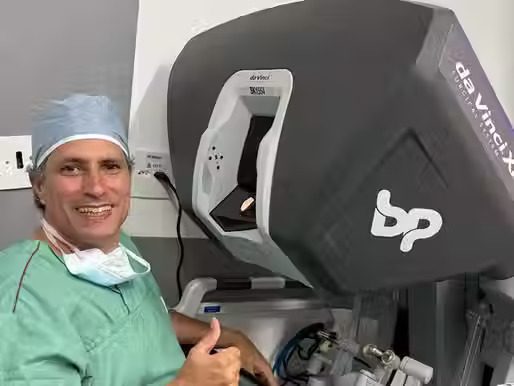
Transoral robotic surgery (TORS) represents one of the most significant technological advances in the surgical treatment of obstructive sleep apnea and hypopnea syndrome (OSAHS). This technology has reshaped the therapeutic approach to patients whose obstruction occurs in specific anatomical areas, particularly the lateral pharyngeal wall and the base of tongue, offering an effective and safe alternative to conventional treatments in selected cases.
Fundamentals of Transoral Robotic Surgery
TORS uses the Da Vinci surgical system, approved by the U.S. FDA in December 2009 and originally developed at the University of Pennsylvania. This system employs a high-precision computerized platform that allows the surgeon to operate through the patient’s mouth, with no need for external incisions.
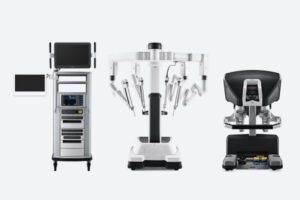
It shows the 3 components of the Da Vinci surgical robot: Console, Vision Cart and Patient Cart
Components of the Da Vinci surgical robot
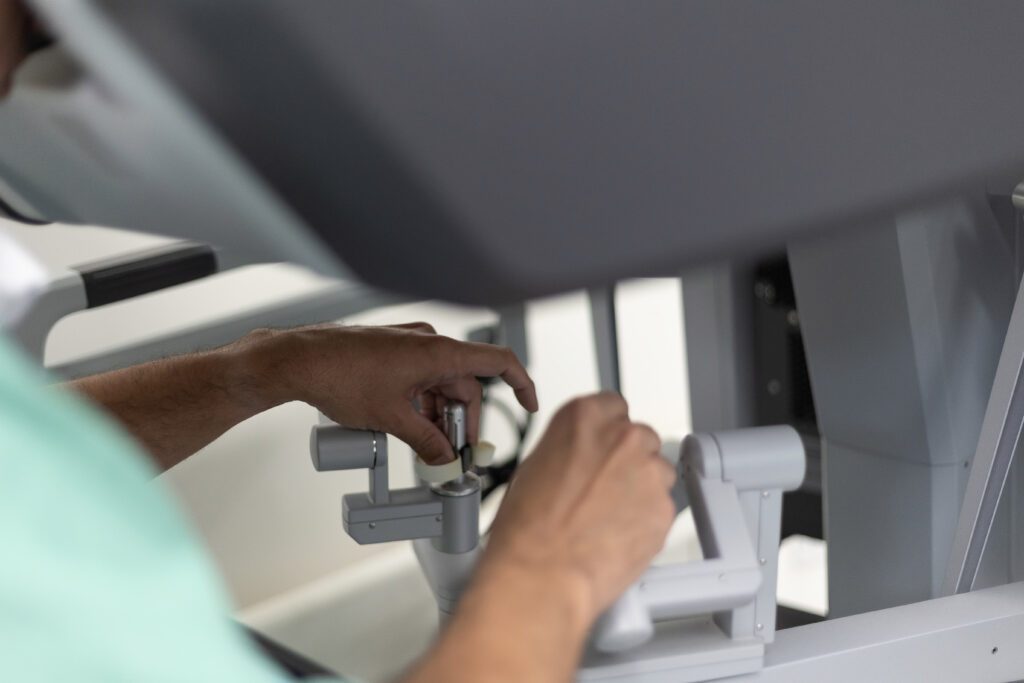
The system is made up of three main components: the surgeon’s console, the patient cart with robotic arms, and the vision cart. The surgeon controls the robotic instruments through a console similar to a video game, using controllers that reproduce hand movements with great accuracy, but with greater dexterity and tremor elimination
An important point is that the surgical robot is not a new surgical technique. It is an instrument that can be used to obtain the best possible results from the various existing surgical techniques. For example, expansion pharyngoplasty is a widely used technique for treating sleep apnea and can be performed without the robot; however, incorporating robotic technology may help achieve more satisfactory results with a lower complication rate, using the same technique.
Components of the Da Vinci surgical robot
Anatomy and Pathophysiology of the Obstruction
Obstructive sleep apnea and hypopnea syndrome (OSAHS) results from collapse of the upper airway during sleep, caused by relaxation of the pharyngeal muscles. The main sites of obstruction include:
Lateral Pharyngeal Wall
Collapse of the lateral pharyngeal walls is one of the leading causes of obstruction in patients with OSAHS. During sleep, the loss of muscle tone allows these structures to come closer together, significantly narrowing the airway.
Base of Tongue
The base of tongue is one of the most challenging sites for traditional surgical intervention. Hypertrophy of the lymphoid tissue (lingual tonsils) or an increase in the volume of the intrinsic tongue muscles can cause significant obstruction during sleep.
Advantages of the Robotic Approach
Technical Benefits
- Magnified 3D visualization: Allows precise identification of anatomical structures and greater safety during dissection
- Articulated instruments: 360-degree movements with precision beyond that of the human hand
- Tremor filtration: Eliminates involuntary movements, increasing surgical precision
- Access to hard-to-reach structures: surgery in areas such as the base of tongue and lingual tonsils is technically very difficult to perform without the help of the robot
Clinical Benefits
- Less intraoperative bleeding: The precision of the robotic instruments reduces tissue trauma
- Faster recovery: Greater precision and less trauma may lead to a faster recovery
- Functional preservation: Lower risk of complications and of changes to functions such as swallowing and speech
Who is this surgery indicated for?
Robotic surgery for apnea is an excellent alternative for people who have not adapted to CPAP or to any other medical treatment for sleep apnea. See also how snoring and sleep apnea surgery works.
To consider surgery, it is essential to perform a polysomnography (sleep study), which assesses the apnea and hypopnea index, the presence of oxygen desaturation, heart rate changes, and other parameters.
Imaging studies, such as a CT scan, are used to assess the anatomical structures of the region
In addition, a thorough physical evaluation combined with flexible nasolaryngoscopy provides important information about whether surgery is feasible.
In some cases, drug-induced sleep endoscopy may be needed to provide additional information.
After all of this, each case is analyzed individually and the best course of action can be defined.
Future Perspectives
Robotic surgery continues to evolve, with promising prospects. The reduction in the size of the robotic arm and the incorporation of technologies such as the CO2 laser are steps aimed at broadening its potential uses.
The new frontiers are the use of the robot as an augmented reality platform, as well as the use of AI, to make surgeries more precise, safe and efficient.
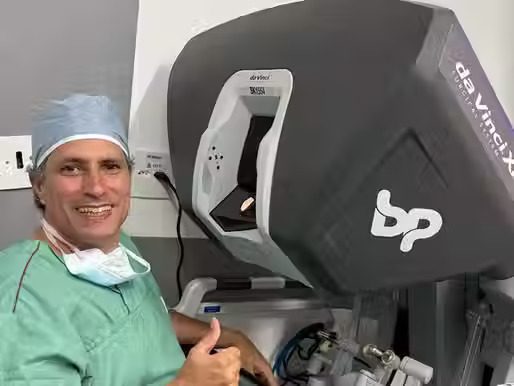
Seated at the robot’s console, about to begin a pharyngoplasty surgery for the treatment of sleep apnea
Dr. José Eduardo Marcondes, physician, otolaryngologist (ENT). CRM-SP 107.711 (Brazilian medical license) | RQE 43.840 (specialist registration). This content is informational, does not replace a medical consultation, and does not supersede the plan of care defined by your own physician.
Sleep well again.
The diagnosis is individual. Book a consultation and find out what applies to your case.
Read also:
About the author
Dr. José Eduardo Marcondes
Physician, Otolaryngologist (ENT) · CRM-SP 107.711 · RQE 43.840
Trained and completed his residency at Escola Paulista de Medicina (UNIFESP), with more than two decades of experience. Focused on the treatment of snoring and sleep apnea, nasal obstruction, chronic sinusitis, adenoids and tonsils, in adults and children. Member of ABORL-CCF and of the medical staff at Hospital Israelita Albert Einstein, Vila Nova Star and São Luiz.
Discover his full career → · Schedule an appointment on WhatsApp
Leave a Reply